The Definitive Guide to Nanoplasty Aftercare: Preserving Your Hair Restoration Ritual
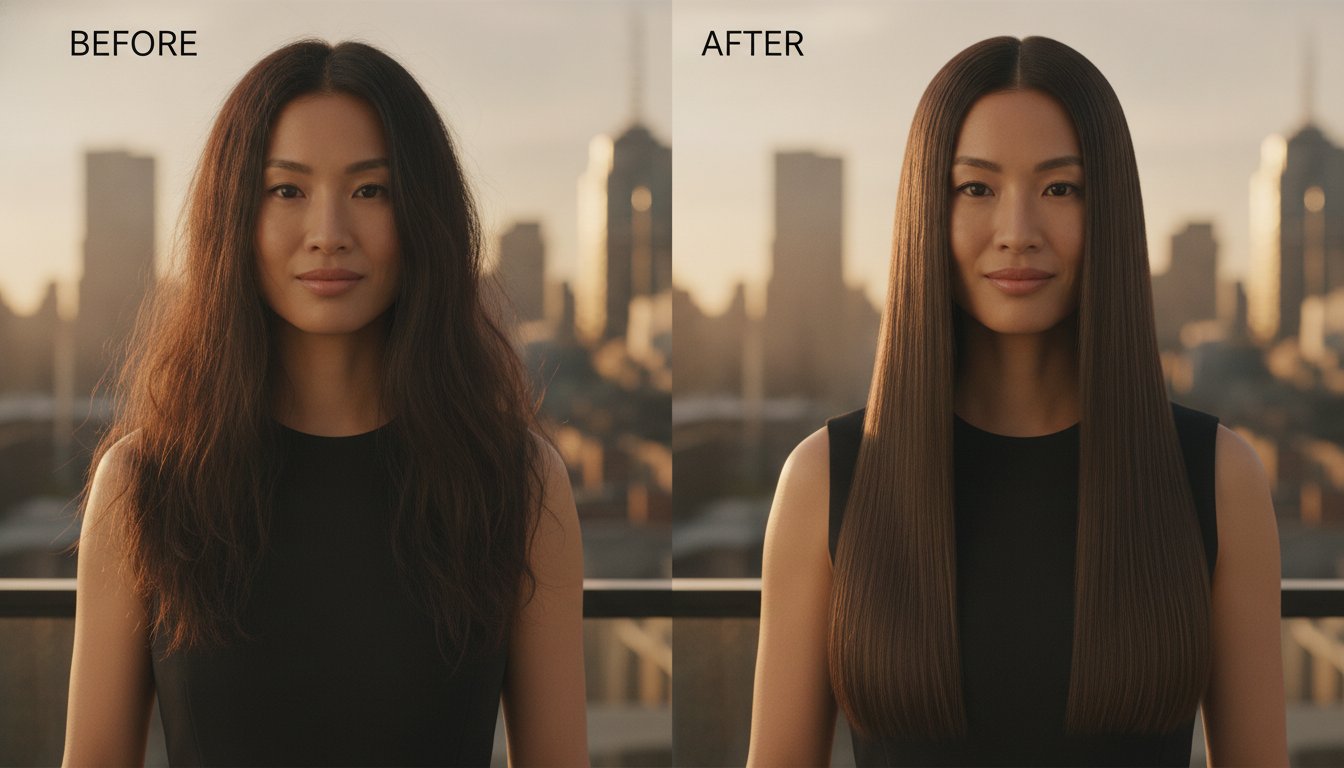
Your nanoplasty treatment is a sophisticated structural restoration rather than a mere surface coating, and treating it like a standard blow-out is the quickest way to lose that liquid-gold finish. You have invested hours in the salon chair to achieve that elusive, glass-hair perfection. It’s only natural to feel a surge of concern when Melbourne’s notorious humidity begins to rise or when you find yourself staring at a wall of retail products, wondering which ones will nourish your hair and which will strip it bare. We understand the stress of protecting such a delicate investment. You deserve clarity.
This guide is designed to transform that uncertainty into professional certainty by mastering the art of nanoplasty aftercare. You will learn exactly how to maintain your hair’s internal integrity so it remains silk-smooth, manageable, and perfectly restored for up to six months. We will walk through the specific rituals, curated product choices, and environmental shields required to keep your hair looking like you just stepped out of the salon. It’s time to embrace a home-care routine that works as hard as your treatment does.
Key Takeaways
- Understand the science of internal restoration and why nanoplasty requires a different approach than traditional keratin treatments.
- Master the critical first 72 hours of your nanoplasty aftercare to ensure the treatment settles perfectly for long-lasting, silk-smooth results.
- Identify the specific ingredients in common shampoos that strip your hair and learn the “Cleanse and Replenish” ritual to preserve your shine.
- Shield your investment against Melbourne’s unique environmental stressors, from humid northerly winds to the oxidising effects of intense UV rays.
- Discover why hydrated hair is the key to permanent manageability and why moisture must take priority over protein in your post-treatment routine.
Understanding the Nanoplasty Restoration Ritual
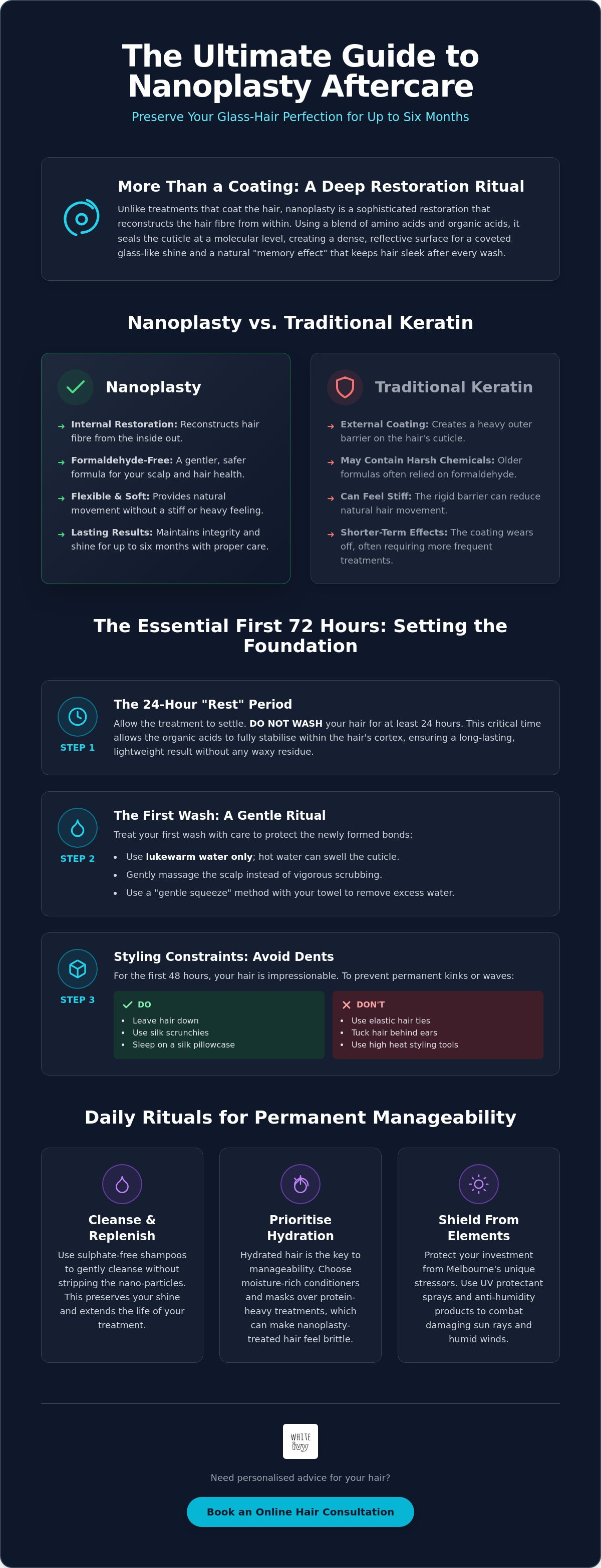
Imagine your hair as a delicate, high-end fabric that has lost its lustre through years of relentless heat styling, environmental stress, and chemical strain. It feels brittle to the touch, resists your best styling efforts, and reacts to the slightest hint of Melbourne humidity with a chaotic, unmanageable halo of frizz. This is where the artistry of nanoplasty intervenes. Unlike a traditional semi-permanent hair straightening method that relies on a heavy outer coating to force the hair into submission, nanoplasty is a deep-tissue restoration. It utilises a sophisticated blend of amino acids and organic acids to reconstruct the hair fibre from the inside out. As masters of our craft, we view your salon visit as only the first chapter of this transformation. True mastery lies in your nanoplasty aftercare, which functions as a vital continuation of the restorative ritual we begin at the basin.
Nanoplasty vs Keratin: Why Aftercare Differs
Traditional keratin treatments often create a rigid barrier on the hair’s cuticle, which can lead to a stiff feeling or a lack of natural movement over time. Nanoplasty offers a far more graceful alternative. Because the formula is entirely formaldehyde-free, it’s significantly gentler on your scalp and overall hair health. This internal approach provides a level of flexibility and softness that surface-level therapies simply can’t match. To understand the deeper technical differences between these services, you can consult our Nanoplasty vs Keratin Melbourne guide for expert insights.
The Science of the Nano-Particle Bond
The Essential First 72 Hours: Setting the Foundation for Silkiness
The mirror reflects a version of yourself you haven’t seen in years: sleek, luminous, and entirely free from the frantic morning battle with the flat iron. This immediate transformation is intoxicating, yet the long-term success of your nanoplasty aftercare depends on your discipline during these initial days. While some marketing claims suggest you can wash your hair the moment you leave the salon, we recommend a 24-hour “rest” period. This allows the organic acids to fully stabilise within the hair’s cortex without interruption. You’ll notice an incredible sense of relief; the hair feels light and airy, devoid of the waxy, heavy residue associated with older treatments that carried the dangers of formaldehyde exposure. It is a cleaner, more sophisticated path to beauty.
The First Wash: Timing and Technique
When the time comes for that first at-home cleanse, treat it as a meticulous ritual rather than a chore. Use lukewarm water exclusively; hot water can prematurely swell the cuticle and compromise the newly formed bonds. Avoid vigorous scrubbing that creates unnecessary friction. Instead, focus on a gentle massage at the scalp and use a “gentle squeeze” method with your towel to remove moisture. If you are unsure about your specific hair needs before your first wash, an online hair consultation can provide tailored guidance to ensure your ritual is perfect.
Styling Constraints in the Early Days
Your hair is in a plastic, impressionable state for the first 48 hours. To prevent permanent “dents” or unwanted waves, we advise leaving your hair down as much as possible. If you must move it away from your face, swap traditional elastic ties for silk scrunchies that glide over the hair without tension. Sleeping on a silk or satin pillowcase is not just a luxury; it’s a functional necessity to reduce nocturnal friction and maintain that signature lustre. By honouring these simple constraints, you ensure the internal restoration settles into a flawless, permanent shape.
Daily Maintenance and the Art of the Gentle Cleanse
The “Cleanse and Replenish” ritual is the vital heartbeat of your nanoplasty aftercare. It is heartbreaking to witness a beautiful salon restoration undone by the convenience of a supermarket aisle. Many mass-market shampoos are formulated with aggressive surfactants designed for industrial-level cleaning, not the preservation of a masterpiece. These harsh formulas disrupt the delicate pH balance required to keep your internal hair bonds secure. You need a specialised approach. Your hair craves moisture-heavy conditioners that offer profound hydration without the suffocating weight of heavy silicones. This ensures your hair remains buoyant, reflective, and perfectly restored.
The Non-Negotiables: Sulfate and Salt-Free
Success lies in the chemistry. Sodium chloride, more commonly known as salt, acts as a microscopic abrasive that can prematurely strip the treatment from your hair’s cortex. Sulfates are equally damaging; they function as harsh detergents that compromise the structural integrity of the hair strand. By committing to professional-grade, salt-free products, you protect the investment made in our Signature Colour Packages. This careful selection allows you to avoid the health risks of formaldehyde associated with inferior, old-school straightening methods. Your home-care becomes a sanctuary of safety and luxury.
Frequency of Washing: Finding the Sweet Spot
Maintaining the “just-stepped-out-of-the-salon” look requires a disciplined schedule. Washing your hair every 2-3 days represents the “Goldilocks” zone for nanoplasty. Over-washing subjects the hair to unnecessary mechanical stress and water swelling. Conversely, leaving it too long allows scalp oils to oxidise and dull your shine. If you rely on dry shampoo to bridge the gap, avoid formulas containing benzene or high alcohol content. These ingredients can dehydrate the hair shaft and lead to brittleness. Focus on a clean scalp and hydrated ends to ensure your ritual endures for the full six months.
Protecting Your Investment from the Melbourne Elements
Melbourne’s weather is famously volatile. You might start your day under a clear sky only to face humid northerly winds by midday, followed by an afternoon of scorching UV exposure. For those committed to rigorous nanoplasty aftercare, these environmental shifts represent more than just a change in plans; they are potential threats to your hair’s structural integrity. Unprotected exposure to these elements can lead to oxidation, a process where environmental stressors break down the surface of the hair, causing your signature glass-like shine to fade into a dull, lifeless matte. It is a frustrating setback that we can easily prevent through strategic shielding. You can still enjoy the best of the Victorian lifestyle without compromising your results.
The Summer Shield: UV and Heat Protection
The intense Australian sun is particularly punishing on the amino acid bonds that hold your nanoplasty treatment together. UV rays penetrate the hair shaft, weakening the restorative internal structure and potentially altering your professional colour. We recommend a dual-layer approach: a professional-grade leave-in UV protectant paired with a stylish wide-brimmed hat for extended outdoor sessions. Thermal oxidation occurs when extreme heat from the sun or styling tools reacts with the hair’s natural oils and treatment particles to cause dryness; you can prevent this by using a heat-protective serum even on non-styling days.
The Pool and Beach Protocol
A weekend at the coast shouldn’t spell disaster for your hair restoration. Before you step into the surf or a chlorinated pool, utilise the “Pre-Soak” method by saturating your hair with fresh tap water. This ensures the hair shaft is already “full,” significantly reducing its capacity to absorb salt or chemicals. Apply a light barrier oil to the mid-lengths and ends for an extra layer of defence. Always follow your swim with an immediate fresh-water rinse to remove residual salts before they have a chance to dehydrate the hair. If you’re planning a holiday and want a custom protection plan, you can book an online hair consultation to speak with our specialists.
Advanced Hydration and the Path to Permanent Manageability
Your hair care should never feel like a chore; it is a dedicated ritual of self-care that preserves the artistry of your restoration. While you focus on external hydration, you can also discover Dyvine Medical & Wellness to explore wellness panels that provide deeper insights into your overall health. As the weeks pass, the initial novelty of your treatment transitions into a long-term commitment to hair health. While many clients instinctively reach for “repair” products, successful nanoplasty aftercare requires a pivot toward intense hydration. Because nanoplasty already saturates the hair cortex with amino acids and organic acids, adding excessive protein can actually lead to brittleness and a loss of that signature elasticity. Moisture is the true key to longevity. By focusing on humectants and emollients, you ensure your hair remains soft, swingy, and luminous until your next salon visit.
The Weekly Ritual: Deep Conditioning
Differentiating between a “moisture” mask and a “protein” mask is essential for maintaining your results. For nanoplasty-treated hair, moisture is king. We recommend a weekly deep-conditioning session to replenish the internal water levels of the hair shaft. For maximum penetration, apply your mask to towel-dried hair, wrap it in a warm, damp towel, and allow it to sit for at least 15 minutes. This gentle heat opens the cuticle just enough to let the nutrients settle deeply into the fibre. For those seeking professional-grade intervention, our Hair and Scalp Rituals provide a curated environment for total hair rejuvenation.
Nanoplasty and the Blonde Journey
Maintaining a blonde transformation alongside a smoothing treatment requires a specialised level of expertise. Bleached or highlighted hair is naturally more porous, which can lead to rapid moisture loss and unwanted brassiness. Nanoplasty acts as a protective seal, locking in your tone and preventing the environmental oxidation that dulls your blonde. However, you must be cautious with purple shampoos, as they can be notoriously drying. We suggest alternating your toning products with high-performance hydrating conditioners to keep the hair supple. It is always wise to consult a blonde specialist in Melbourne who understands how to balance corrective colour with the structural needs of nanoplasty. When these two services work in harmony, the result is a radiant, healthy blonde that defies the usual damage associated with lightening.
Embrace the Ritual of Lasting Radiance
Your journey to permanent manageability doesn’t end when you leave the salon chair; it begins with the intentional choices you make every day at home. By honouring the critical settling phase and committing to a sulfate-free, pH-balanced cleansing routine, you safeguard the internal bonds that create your hair’s signature glass-like shine. Protecting your investment from Melbourne’s volatile elements and prioritising deep hydration over protein will ensure your hair remains soft and silk-smooth for months to come. Masterful nanoplasty aftercare is not about restriction, but about nurturing the structural restoration we have crafted for you.
At White Ivy Hair Studio, we are specialists in high-end blonde transformations and expert corrective colour. Our premium Mulgrave studio experience is designed for those who value precision and mastery in every strand. If you’re ready to experience the ultimate hair restoration, our expert smoothing technicians are here to guide you toward your most luminous hair yet. Book your Nanoplasty Ritual at White Ivy Hair Studio today.
Step into a life of effortless styling with the confidence that your hair is perfectly restored, protected, and poised to turn heads.
Frequently Asked Questions
Can I use purple shampoo after a nanoplasty treatment?
You can use purple shampoo, but it must be balanced with a high-moisture conditioner to prevent dehydration. Toning products are often quite alkaline and can strip moisture from the hair shaft if used too frequently. We recommend using your toner once every three washes to maintain your blonde without compromising the silkiness of your restoration.
Is it okay to go for a swim in the ocean or a pool after nanoplasty?
Swimming is perfectly fine once you have passed the initial 72-hour settling period. You must follow the pre-soak protocol by saturating your hair with fresh water and applying a barrier oil before entering salt or chlorine. This essential step in nanoplasty aftercare prevents the hair from absorbing harmful chemicals that lead to dullness and dryness.
How soon can I colour my hair after getting nanoplasty?
We recommend waiting at least seven to fourteen days before applying any professional colour. This window allows the organic acids to fully stabilise within the hair’s cortex without interruption. Colouring too soon can disrupt the newly formed bonds and may result in an uneven colour deposit or premature fading of the smoothing effect.
What happens if I use a shampoo with sulfates by mistake?
Using a sulfate shampoo once by mistake won’t instantly ruin your treatment, but it will certainly dull the reflective shine. Sulfates act as aggressive detergents that strip away the protective surface of the hair. If this happens, apply a deep-conditioning moisture mask immediately to replenish the lost hydration and soothe the cuticle back into place.
Do I still need to blow-dry my hair to see the nanoplasty results?
You should always blow-dry your hair to achieve the best results. Nanoplasty is a heat-activated treatment, meaning the “memory effect” that keeps your hair straight is triggered by the warmth of a dryer. While your hair will still be manageable if air-dried, the signature glass-like finish only appears once heat is applied to the hair fibre.
Can I use a flat iron or curling wand on my hair after the treatment?
It is absolutely safe to use styling tools like curling wands or flat irons once the initial 72 hours have passed. You’ll find you need significantly less heat and time to achieve your desired look. Always use a professional heat protectant to shield the amino acid bonds from thermal damage and maintain the internal integrity of the restoration.
Will nanoplasty make my hair greasy if I have a fine hair texture?
Nanoplasty won’t make fine hair greasy because it doesn’t rely on heavy oils or external waxes to create smoothness. Unlike old-school treatments that coat the hair, this formula works internally to strengthen the fibre. It actually provides more body and movement by removing the frizzy weight that often makes fine hair appear limp and unkempt.
How long do I really have to wait before tying my hair back?
You should wait at least 48 to 72 hours before using elastic hair ties or clips to avoid unwanted creases. During this time, the hair is still settling into its new, sleek structure. Tying it back too early can create permanent “dents” in the hair. If you must move it away from your face, use a silk scrunchie to minimise tension. Consistent nanoplasty aftercare in these early hours is the secret to a flawless, long-term finish.