The Colour Wheel for Hairdressers: Mastering the Art of Toning and Correction
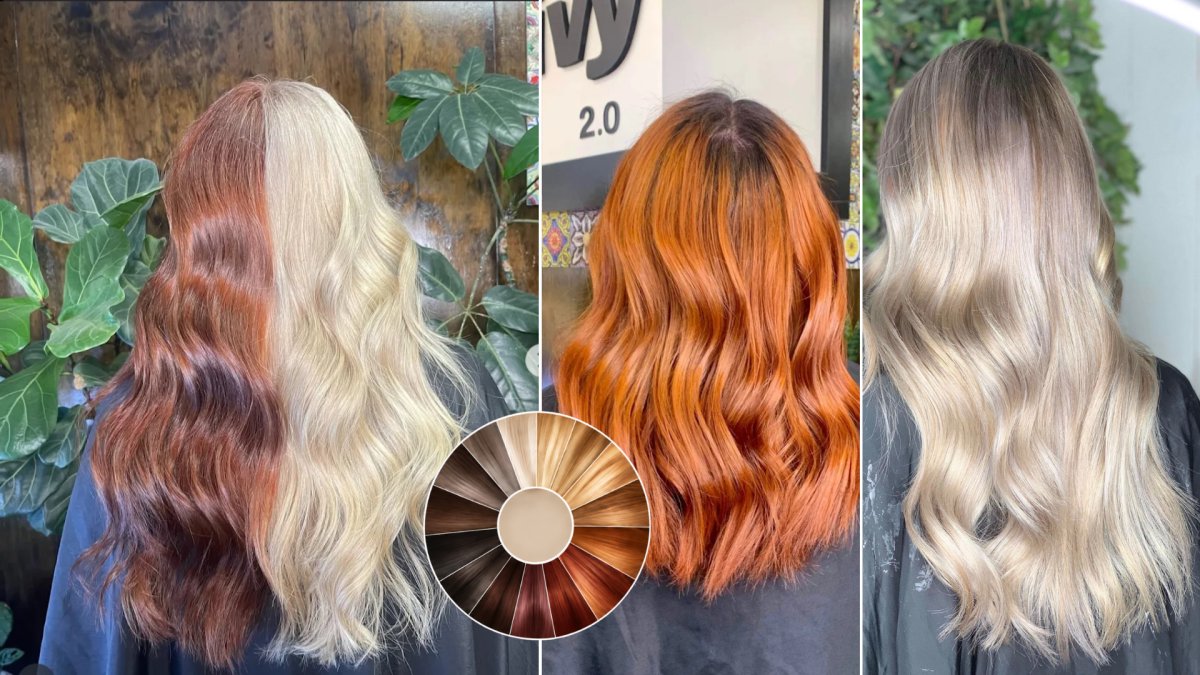
A flawless blonde isn’t born at the mixing station; it’s engineered through the cold, hard logic of pigment physics. You’ve likely felt that sinking sensation when a standard lift reveals a stubborn orange glow or a delicate grey blend turns disappointingly muddy, leaving you to question your instincts at the basin. It’s a common frustration that can undermine even the most seasoned professional’s confidence. By truly mastering the colour wheel for hairdressers, you’ll unlock the mathematical secrets required to eliminate these brassy disasters and achieve prestigious, high-end transformations every time. This guide will take you from the chaos of corrective guesswork to the calm of technical certainty. We’ll explore the sophisticated art of neutralisation and the rituals that ensure your work remains the definitive gold standard in the salon.
Key Takeaways
- Learn to apply the Law of Opposites to identify the precise toner required to neutralise unwanted warmth and achieve bespoke creamy or ashy results.
- Shift from guesswork to mastery by using the colour wheel for hairdressers as your definitive blueprint for predictable, high-end blonde transformations.
- Gain the confidence to manage complex corrective scenarios, using geometric logic to restore hair integrity and aesthetic balance after a mishap.
- Discover how to blend grey hair seamlessly by balancing underlying natural pigments with sophisticated artificial tones for a multi-dimensional finish.
The Colour Wheel for Hairdressers: More Than Just a Diagram
Imagine the frantic energy of a busy Saturday morning, the air thick with the scent of developer, only to find your client’s hair has pulled a garish, neon yellow that defies your usual toner. This moment of aesthetic chaos is where many feel the weight of uncertainty, the stress of a failing service, and the fear of an unhappy client. The colour wheel diagram acts as a definitive geometric map, transforming panic into professional poise. It isn’t just a static poster on the wall; it’s a dynamic blueprint for every successful blonde transformation.
Achieving a prestigious result requires more than just picking a shade from a swatch book. You must first identify the underlying pigment, the raw, exposed warmth that lives beneath the surface. Without this understanding, you’re merely guessing. Whether exploring professional shades and colour ranges through stockists like colourwarehouse.com or preparing custom toners at the basin, mastery over the colour wheel for hairdressers allows you to predict exactly how a Level 8 gold will react with a violet-based ash, ensuring a predictable, high-end finish. This specialised knowledge turns a chaotic correction into a calm, expert-led resolution.
Primary vs. Secondary Colours in Hair Artistry
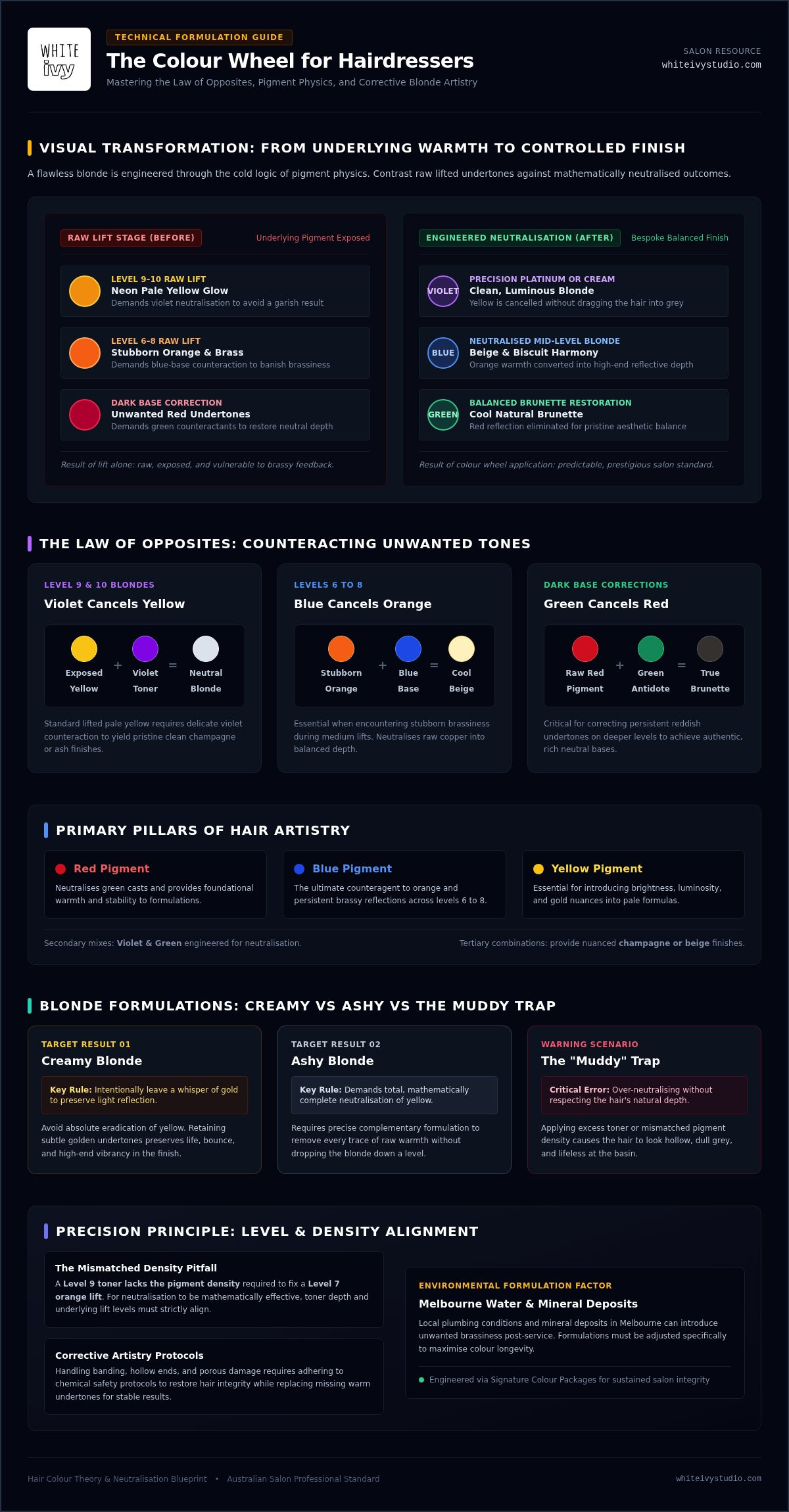
Red, blue, and yellow are the foundational pillars of hair artistry, the primary pigments from which all other shades descend. By mixing these, we create secondary corrective tones like violet and green for neutralisation.
- Red: Neutralises green and provides warmth.
- Blue: Counteracts orange and brassy tones.
- Yellow: Essential for adding brightness and gold.
Tertiary colours then refine the result, adding the delicate nuances of champagne or beige. Our Signature Colour Packages utilise this theory to deliver bespoke, high-end results through technical superiority. Understanding these relationships is the first ritual in the journey toward mastery.
Mastering Neutralisation: The Blonde Specialist’s Blueprint
Facing a basin full of stubborn, brassy reflections can feel like a high-stakes puzzle with no clear solution. It’s the moment where technical theory meets salon reality. The colour wheel for hairdressers provides the definitive answer through the Law of Opposites. This fundamental principle relies on complementary colors to cancel out unwanted warmth, turning a stressful correction into a polished, high-end result.
Achieving prestige results requires a nuanced approach to neutralisation. To craft a sophisticated “creamy blonde,” you must intentionally leave a whisper of gold to maintain vibrancy. In contrast, a true “ashy blonde” demands total neutralisation of all underlying yellow. Be wary of the “muddy” trap. If you over-neutralise without respecting the hair’s natural depth, the finish becomes hollow, grey, and lacking in life. We ensure every formula is mathematically balanced within our Signature Colour Packages to avoid these aesthetic mishaps.
Counteracting Unwanted Tones: A Cheat Sheet
Consistency in the salon stems from a deep understanding of which tones act as the antidote to others. Use this refined guide to navigate your next formulation:
- Violet cancels Yellow (ideal for level 9 and 10 blondes).
- Blue cancels Orange (essential for levels 6 to 8).
- Green cancels Red (critical for dark base corrections).
Precision is key. A level 9 toner lacks the pigment density to fix a level 7 orange lift; the levels must align for the neutralisation to be effective. If you’re struggling with unpredictable results, an online hair consultation can help clarify the path to your desired outcome.
Corrective Artistry: Applying the Wheel to Complex Scenarios
The frantic atmosphere created by a botched home dye or a previous salon mishap often involves banding, hollow ends, and inconsistent porosity that seems to defy logic. It’s an intense scenario that demands immediate, expert-led intervention to prevent further structural damage. This is where expert colour correction hairdressers turn to the geometric certainty of the colour wheel. By adhering to the chemical safety protocols found in FDA guidance on hair dyes, we safely navigate the complex journey of restoring hair integrity. The colour wheel for hairdressers provides the essential coordinates to neutralise unwanted pigments while simultaneously replacing the missing warm undertones required for a stable, long-lasting result.
In Melbourne, our local environmental conditions play a significant role in how these tones evolve post-service. Mineral deposits from local plumbing and varying water conditions can introduce unwanted brassiness that challenges even the most precise technical applications. It’s a nuanced factor that requires us to adjust our formulations for maximum longevity, ensuring your prestigious results don’t fade into mediocrity. Precision is our ritual.
Grey Blending and the Colour Wheel
Transitioning to a natural look often brings a sense of aesthetic tension, as clients fear the loss of their vibrant identity during grey blending. We use the wheel to balance the cool, translucent nature of white hair with sophisticated artificial pigments, creating a seamless, multi-dimensional finish. This professional blend offers the ultimate release from the cycle of high-maintenance coverage. While the wheel serves as our map, the stylist remains the definitive navigator, steering every transformation toward a prestigious conclusion. We take control of the chaos with technical superiority.
Elevate Your Craft Through Technical Mastery
True mastery of the colour wheel for hairdressers transforms a chaotic corrective scenario into a prestigious, ritualistic success. By applying the mathematical laws of neutralisation, you move beyond the stress of unpredictable toning into a state of professional certainty. You’ve learned how to identify underlying pigments, balance complementary hues, and account for the specific mineral challenges found in our Melbourne water. This technical superiority is what defines a true specialist.
At White Ivy Hair Studio, our boutique Mulgrave studio experience is built on this technical precision. As Melbourne’s leading blonde transformation specialists, we use our mastery of corrective colour to ensure every result is flawless and high-end.
You now possess the map. It’s time to navigate your next transformation with total confidence.
Frequently Asked Questions
What is the most important colour on the wheel for fixing brassy blonde hair?
Violet is the definitive colour for neutralising the yellow, canary tones often associated with brassy blonde hair. If the brassiness leans more toward a copper or orange hue, blue is the necessary antidote. Using the colour wheel for hairdressers allows us to select the precise pigment that sits directly opposite the unwanted warmth, ensuring a clean, high-end finish that looks intentional and polished.
Can I use the colour wheel to fix a hair colour disaster at home?
Attempting a home fix often compounds the initial stress of a colour disaster. While the theory seems straightforward, professional correction requires evaluating hair porosity and previous chemical rituals that home environments lack. Our Mulgrave studio specialists utilise the colour wheel for hairdressers to steer chaotic mishaps toward a calm, expert-led resolution. It’s safer to trust a master of craft who can guarantee a prestigious result.
How does the colour wheel help with grey blending techniques?
The colour wheel serves as a blueprint for balancing the cool, translucent nature of natural white hair with sophisticated artificial tones. By identifying the missing underlying pigments, we can formulate a blend that looks multi-dimensional rather than flat or hollow. This technical approach ensures the transition feels like a curated ritual rather than a loss of identity, resulting in a seamless, low-maintenance aesthetic that honours your natural sparkle.
Why does my hair look green after using an ashy toner?
This undesirable outcome typically occurs when blue-based ash toners are applied to hair with strong yellow underlying pigments. Without the correct balance of warmth, the blue and yellow pigments merge to create a muddy green cast. It’s a common frustration that we resolve through technical precision and a deep understanding of neutralisation. Our Melbourne studio ensures every formula is mathematically balanced to prevent these hollow, greenish results.