Nanoplasty vs Keratin Treatment: Which Is Right for Your Hair?
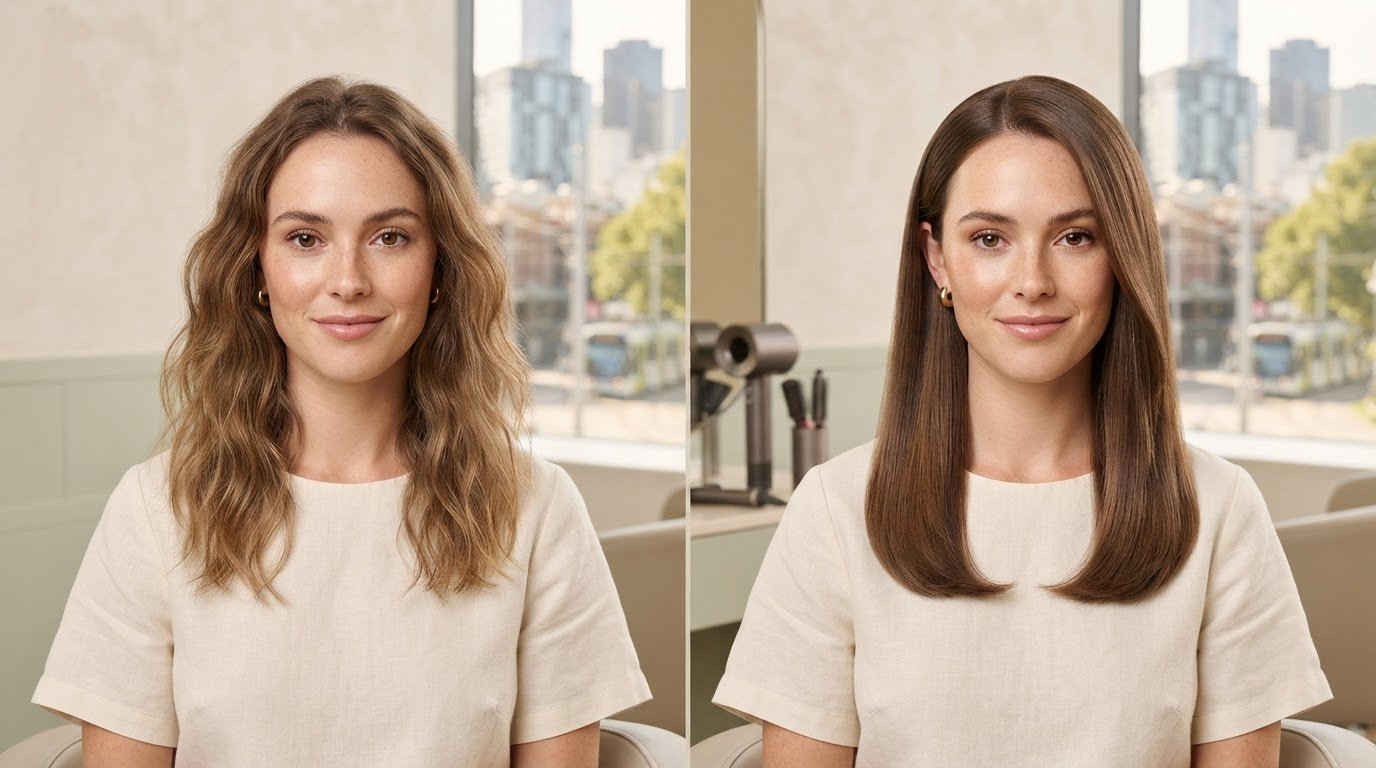
The treatment promising the sleekest finish may not be the right match for your hair. If you’re weighing up nanoplasty vs keratin treatment, it’s understandable to feel unsure: both are used to create smoother, more manageable hair, but the result can vary with the formula, your hair’s condition and the finish you want.
This guide compares the two approaches, including what to consider about upkeep and colour history. If your hair is coloured or lightened, those details matter when planning a smoothing service. At White Ivy Hair Studio in Mulgrave, Melbourne, nanoplasty is considered alongside your colour goals and hair integrity. Use the guidance here to clarify your preferred finish and prepare the hair history that can help shape a considered plan.
Key Takeaways
- Compare nanoplasty vs keratin treatment by the finish and feel you want, not just the treatment name.
- Share your colour and treatment history so suitability can be assessed against your hair’s current condition.
- Factor maintenance into your decision and consider whether the aftercare fits your routine.
- Discuss smoothing and colour plans together before choosing a service plan.
Nanoplasty vs keratin treatment: what differs in the result?
Both treatments aim to leave hair smoother-looking and reduce visible frizz, but they don’t guarantee the same finish. Your starting texture, hair condition, application and the specific formula all influence how your hair looks and feels afterwards. A useful nanoplasty vs keratin treatment comparison starts with the result you want, rather than promises attached to a treatment name.
Keratin is a protein naturally found in hair, as outlined in this overview of hair keratin. Keratin smoothing treatments vary in formulation and application, so results can range from softer, more manageable hair to a more noticeably smoothed finish. Nanoplasty is another smoothing option, offered at White Ivy Hair Studio. Its result also depends on your hair and the service plan.
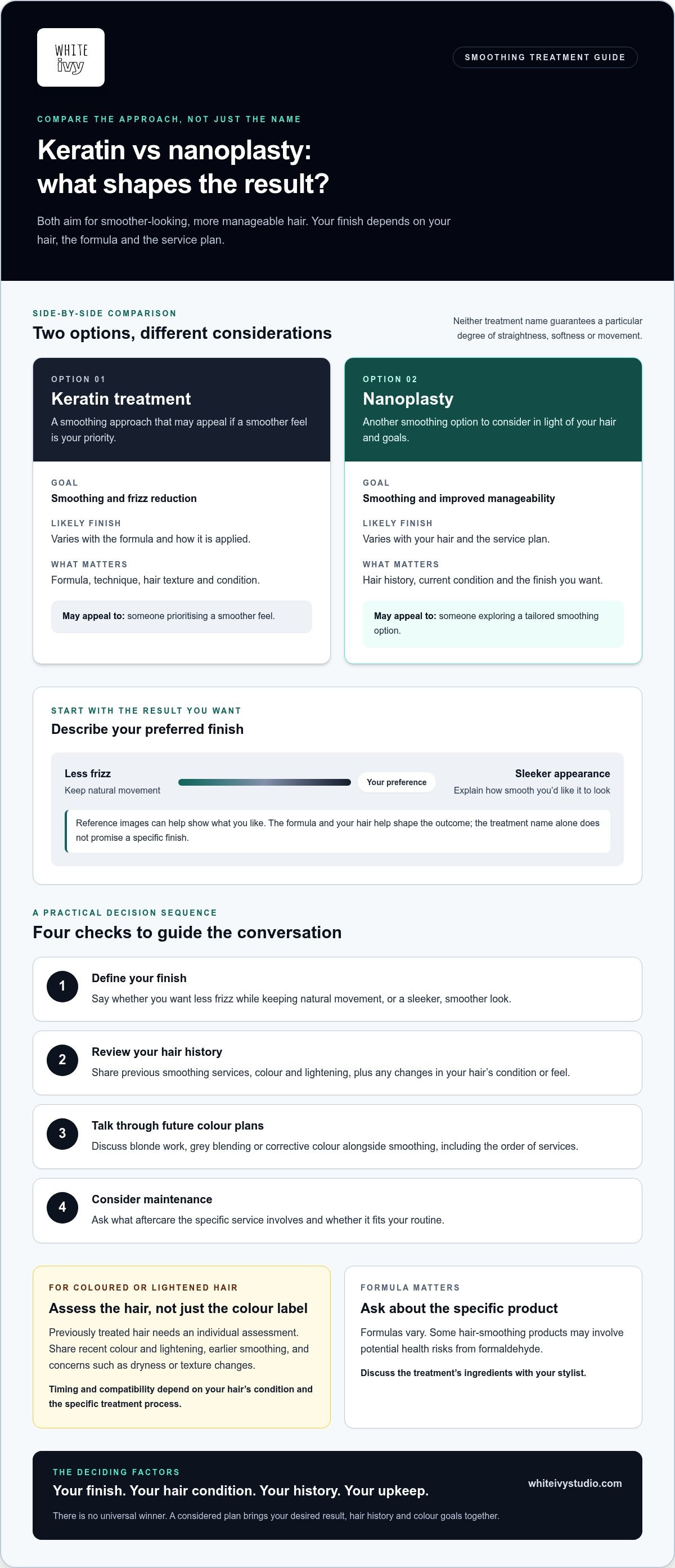
| Consideration | Keratin treatment | Nanoplasty |
|---|---|---|
| Goal | Smoothing and frizz reduction | Smoothing and improved manageability |
| Likely finish | Varies by formula and application | Varies with hair and service plan |
| Key variables | Formula, technique, texture and condition | Hair history, condition and desired finish |
| May appeal to | Those prioritising a smoother feel | Those exploring a tailored smoothing option |
Which treatment may suit your preferred finish?
A keratin treatment may appeal if smoothing is your priority, while nanoplasty offers another approach to consider. Neither name guarantees a particular degree of straightness, softness or movement. Treatment names describe an approach, not a guaranteed finish; your hair and the formula shape the result. Much like personal aesthetic medicine, where clinics such as zabe.au focus on tailored enhancements suited to the individual, hair smoothing delivers the best results when matched precisely to your hair type and history.
How to choose between nanoplasty and keratin for your hair
A thoughtful nanoplasty vs keratin treatment decision starts with your desired finish, then accounts for your hair’s history and future colour plans. Use this framework to prepare for a stylist’s assessment:
- Define your finish: Describe whether you want less frizz while keeping natural movement, or a sleeker, smoother look.
- Review your hair history: List previous smoothing services, lightening and colour. Note any changes in your hair’s condition or feel.
- Consider upcoming colour plans: If you’re planning blonde work, grey blending or corrective colour, discuss the sequence alongside smoothing. Explore Signature Colour Packages as part of your broader colour planning.
- Discuss maintenance: Ask what aftercare the specific service involves and consider whether it fits your routine before settling on a plan.
What should you consider if your hair is blonde or coloured?
Lightened, coloured or previously treated hair needs an individual assessment, not a blanket yes or no. Before your consultation, note recent colour services, lightening, earlier smoothing treatments and any concerns such as dryness or changes in texture. Timing and compatibility depend on the hair’s condition and the specific treatment process, so your stylist can consider both goals together.
Colour history belongs in every smoothing discussion because it helps shape a plan around your hair’s condition and the look you want next. If you’re comparing treatment processes, the US Food and Drug Administration outlines potential health risks of formaldehyde in some hair-smoothing products. Formulas vary, so discuss the specific treatment and its ingredients with your stylist.
Plan your nanoplasty or keratin treatment with a Melbourne stylist
A consultation brings your desired finish, hair history and colour plans into one conversation. Instead of choosing by treatment name alone, a stylist can assess your hair and discuss how White Ivy Hair Studio’s nanoplasty service fits your goals. The best approach depends on your hair and the result you want.
To make the discussion useful, prepare a few details:
- Your current concerns, such as frizz, dryness or difficulty styling.
- Recent and past colour services, including lightening and corrective colour.
- Previous smoothing treatments and any changes you’ve noticed in your hair.
- Reference images that show the finish you like, including how much movement you’d like to keep.
What to share before your hair consultation
Be open about what your hair has been through and what you hope to change. These details help your stylist discuss realistic results and a plan suited to your hair’s condition, rather than relying on a generic promise. If you’re planning a colour refresh as well, explore Signature Colour Packages as part of the conversation.
If a previous colour result is your main concern, discuss the history and your intended colour outcome as part of planning your next service. Although “nano” appears in the name, it doesn’t by itself explain a treatment’s formula: the US FDA’s guidance on the safety of nanomaterials in cosmetics discusses nanomaterials broadly, not nanoplasty specifically.
Bring your questions and colour goals to an online hair consultation to discuss the right next step for your hair.
Choose a smoothing plan that fits your hair
The right answer to nanoplasty vs keratin treatment isn’t a universal winner. Focus on the finish you want, your hair’s condition and the treatment history that may shape your options. Much like broader personal aesthetic care—where practices such as mondayaesthetics.com focus on subtle, natural results rather than dramatic overhauls—achieving great hair comes down to customisation and realistic expectations.
If your hair is coloured or lightened, include those details and any upcoming colour goals in the decision. White Ivy Hair Studio offers nanoplasty in Mulgrave, Melbourne, and specialises in blonde transformations and corrective colour. A consultation can bring these considerations together before you choose a plan.
Share your hair history and the finish you’re after with White Ivy Hair Studio to plan your next step towards smoother, more manageable hair.
Frequently Asked Questions
Is nanoplasty better than a keratin treatment?
Neither nanoplasty nor a keratin treatment is universally better; the right choice depends on your preferred finish, hair history, the specific formula and a professional assessment. Both aim to smooth hair, but the treatment name doesn’t guarantee an exact result. When comparing nanoplasty vs keratin treatment, discuss colour plans and maintenance so the recommendation reflects your priorities.
Can you have nanoplasty or a keratin treatment on coloured hair?
Coloured hair may be considered for either treatment, but there’s no universal yes-or-no answer. Colour history and current condition matter, particularly if your hair has been lightened. Your stylist should review previous services, your intended colour result and the specific smoothing process before recommending a plan. Share recent colouring or bleaching details during a Melbourne consultation.
How long do nanoplasty and keratin treatment results last?
Does nanoplasty or keratin treatment damage your hair?
Neither treatment can be described as damage-free or inherently damaging for everyone. Hair condition, previous chemical services, formula and application all influence the outcome. Before choosing, tell your stylist about breakage, dryness, lightening history and changes in texture. A professional assessment can help weigh your expectations against your hair’s current integrity and discuss a considered plan.