Grey Blending vs Root Touch Up: Debunking the Myths of High-Maintenance Colour
What if that urgent, three-week dash to the salon wasn’t a mandatory sentence, but simply an outdated habit you’ve been conditioned to accept? We’ve all felt that familiar prickle of anxiety when, just fourteen days after a fresh tint, the harsh “skunk line” begins to emerge against your temples, mocking the time and investment you just poured into your appearance. When weighing up grey blending vs root touch up, it’s easy to feel trapped in a cycle of permanent dyes that leave your hair feeling parched, over-processed, and desperately thirsty for a break. You’re likely exhausted by the financial burden and the relentless calendar gymnastics required to keep those silvers at bay.
I understand the frustration of being tethered to a chair every month, and I promise you that a more sophisticated path exists. Modern grey blending offers a strategic liberation from the traditional root cycle, transforming your hair ritual into something effortless and refined. In this article, we’ll explore how these two approaches differ in technique and longevity. You’ll discover how to transition from an aesthetic prison of high-maintenance coverage to a luminous, low-maintenance masterpiece that celebrates your natural beauty while prioritising the health of every strand.
Key Takeaways
- Understand why the traditional three-week cycle of permanent colour creates a harsh regrowth line and how to break free from this exhausting maintenance loop.
- Learn the technical distinctions of grey blending vs root touch up, moving from functional pigment deposits to a curated, multi-tonal artistry that mimics natural hair.
- Debunk common misconceptions about full coverage, discovering how strategic camouflage can actually provide a more sophisticated and bespoke finish than 100% pigment.
- Discover how to align your hair maintenance with your personal lifestyle and Melbourne’s unique environmental factors to ensure lasting elegance between appointments.
- Explore the benefits of all-inclusive Signature Colour Packages that prioritise hair health and transform routine maintenance into a luxurious, high-end ritual.
The Frustration of the ‘Three-Week Trap’: Why Traditional Coverage Often Fails
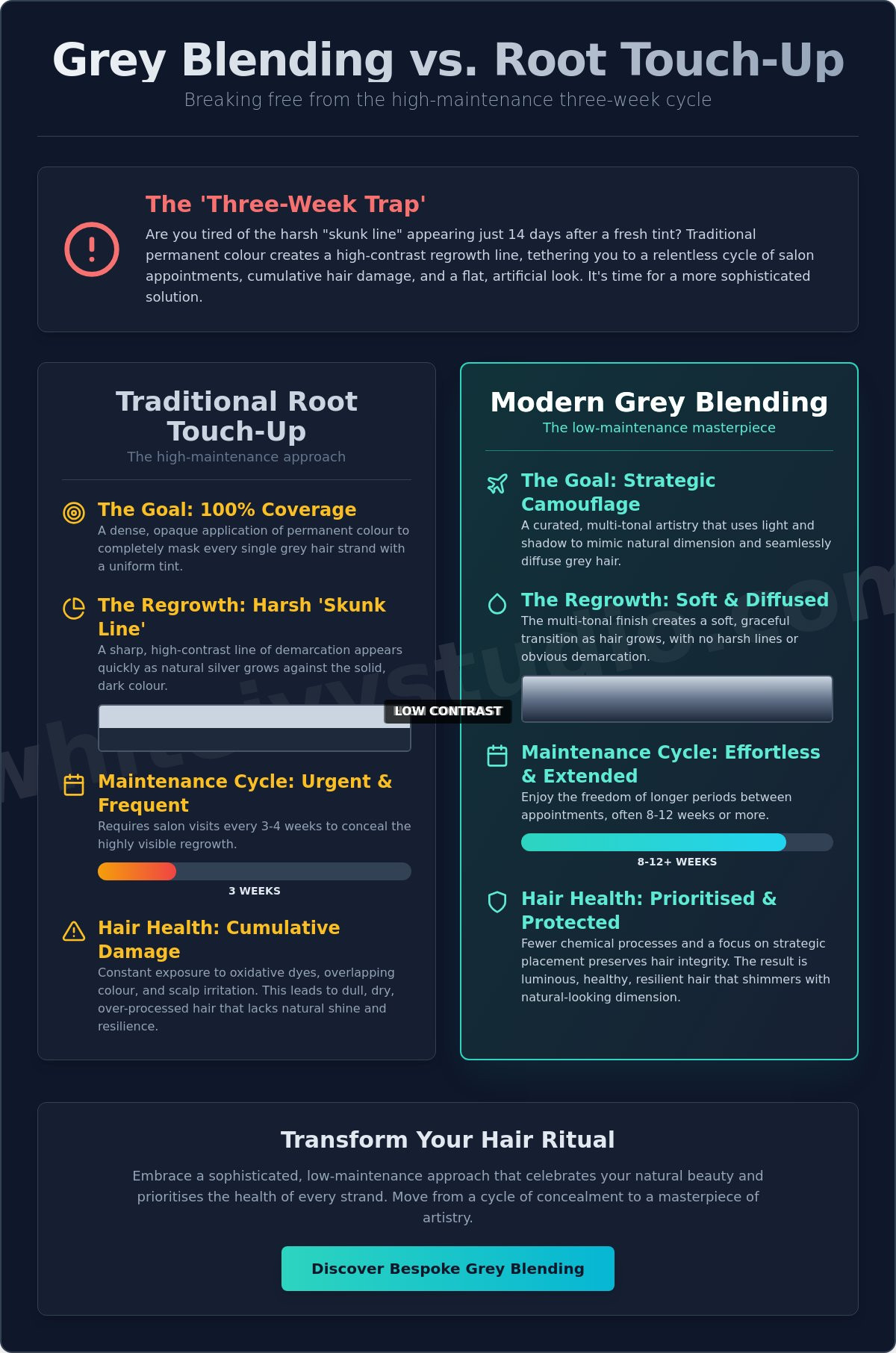
The morning light hits the bathroom mirror, and there it is. A silver horizon, stark and unforgiving against the deep brunette or rich copper you’ve meticulously maintained. It is a subtle shimmer at the temples that rapidly transforms into the dreaded “skunk-stripe” across your parting. For many Melbourne women, the traditional approach to managing silver hair feels less like a premium beauty ritual and more like a relentless, high-stakes chore. This is the three-week trap. It is a cycle where the very solution designed to hide your regrowth actually makes it more conspicuous, creating a psychological burden that dictates your social calendar and drains your time. When we compare grey blending vs root touch up, we must first address the weight of this dependency. Permanent root touch-ups often result in a look that feels flat, heavy, and undeniably artificial, leaving you tethered to a salon chair far more often than you’d like.
The traditional “solid wall” of colour might offer immediate satisfaction, but it lacks the sophistication of a bespoke finish. Over time, these dense applications of pigment rob the hair of its natural light-reflecting qualities. You’re left with a monochromatic mask that fails to move or shimmer, making every new millimetre of natural silver appear even brighter by contrast. It is an exhausting loop of aesthetic maintenance that prioritises temporary concealment over long-term elegance and freedom.
The Science of the ‘Harsh Line’
The reason for this urgent maintenance cycle lies in the simple physics of contrast. Traditional root touch-ups rely on 100% pigment saturation to completely mask the hair. When you place a solid, dark tint directly against 0% pigment, which is what natural grey hair actually is, you create a sharp visual boundary known as demarcation. Various hair coloring techniques have historically focused on this total eradication of grey, but this “solid wall” of colour is the primary culprit for your high-maintenance schedule. Without a soft transition or varying tones, the regrowth has nowhere to hide, making the choice between grey blending vs root touch up a matter of how much contrast you are willing to tolerate.
Cumulative Damage of Constant Tinting
Beyond the aesthetic frustration, the physical cost of monthly permanent tinting is significant. Constant exposure to oxidative dyes can compromise the delicate hair cuticle and irritate the scalp, leading to a loss of natural shine and resilience. Because permanent colour is designed to stay, repeated applications often lead to “overlapping”. This occurs when fresh dye touches previously coloured hair, causing the mid-lengths and ends to become muddy, dark, and devoid of light. In a city like Melbourne, where the erratic weather and UV levels already challenge our locks, maintaining hair health is the ultimate luxury. Choosing a more modern approach isn’t just about saving time; it’s about restoring the integrity of your hair and moving away from the dull, over-processed look of traditional “total” coverage.
Maintaining a healthy scalp environment is a vital part of any hair care routine. Just as families might seek out dedicated specialists like The Lice Chicks, Inc. for professional scalp wellness and care, choosing a colourist who respects your hair’s natural biology is essential for achieving lasting elegance.
Your hair should be a source of confidence, not a calendar-bound anxiety. By re-evaluating the necessity of the traditional tint, you move away from the functional masking of age and toward a curated, artistic expression of your best self. It’s time to break the cycle and embrace a method that works with your hair, not against it.
Defining the Artistry: How Grey Blending Differs from a Standard Root Touch Up
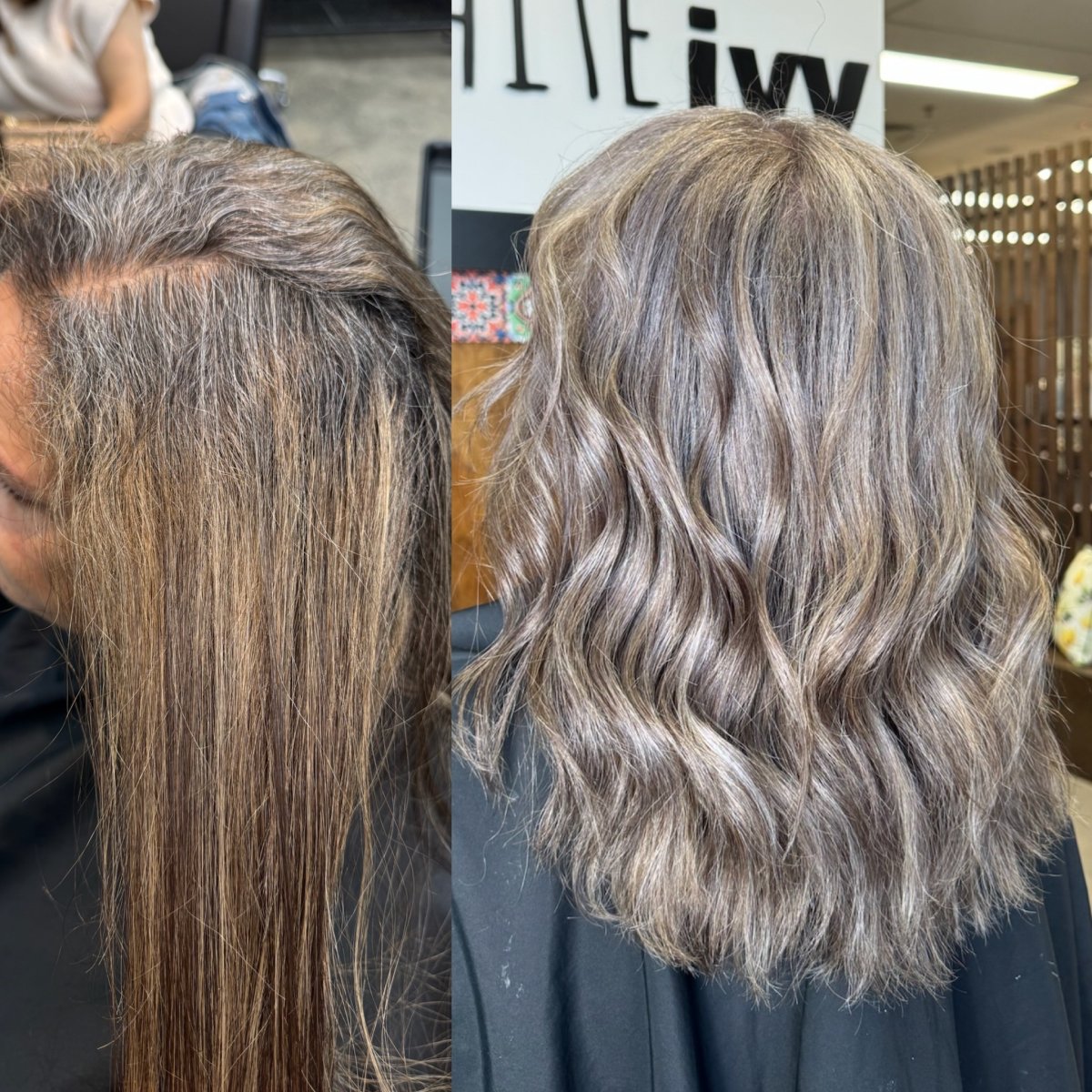
A standard root touch up is, at its core, a functional necessity. It is a dense, opaque application of 100% pigment designed to provide a “global” blanket of colour, effectively masking every single silver strand with a uniform tint. While this offers immediate concealment, it often lacks the soul and dimension of natural hair. When we examine the nuance of grey blending vs root touch up, we move away from simple maintenance and into the realm of high-end artistry. Grey blending is a curated, multi-tonal ritual that uses light and shadow to mimic the organic variation of virgin hair. It doesn’t seek to erase your history; it seeks to enhance it through a bespoke application of translucent pigments and demi-permanent glosses.
Achieving this level of sophistication requires a mastery of craft that far exceeds a standard tint application. Instead of a heavy, monochromatic deposit, a specialist colourist works with the unique architecture of your silver pattern. This method relies on sophisticated chemistry that respects the hair’s integrity. When considering hair dye safety and the long-term health of your scalp, the shift toward these softer, more breathable formulations is a significant advantage. It is a transition from a blunt, chemical solution to a precise, technical application that prioritises the vitality of your hair.
Techniques Used in Professional Blending
The magic of blending lies in the specific tools used to disrupt those solid patches of silver. We often employ “babylights” or “herringbone highlights”, which involve weaving incredibly fine sections of colour that follow the natural flow of your hair. This mimics how the sun would naturally lift your locks. These techniques ensure that as your hair grows, there is no jarring line of demarcation. Because every woman’s silver pattern is as unique as a fingerprint, why grey blending techniques are different for each client is a fundamental principle of our practice. We may even adapt Balayage methods to create a “lived-in” look that feels expensive, intentional, and entirely effortless. The same lived-in philosophy that defines our grey blending approach is also at the heart of the boho blonde aesthetic, which has become Melbourne’s most coveted low-maintenance colour for its seamless, sun-kissed dimension. The precision required for these techniques is the same level of artistry cultivated through dedicated hair styling courses in Melbourne that bridge the gap between foundational training and true salon-ready expertise.
The Visual Result: Opaque vs. Translucent
The visual difference between these two methods is striking. A traditional root touch up can eventually create a “wig-like” density, where the hair looks heavy and saturated. In contrast, grey blending produces a sun-kissed, luminous glow that feels youthful and vibrant. This is achieved through translucency. Translucency allows the natural grey to act as a built-in highlight, reflecting light rather than absorbing it. The result is a finish that doesn’t just cover the hair but illuminates it from within. If you are ready to move beyond the flat finish of a standard tint, exploring our specialised colour services is the first step toward a more liberated hair ritual.
Myth-Busting the ‘Full Coverage’ Mandate: Is 100% Pigment Always Better?
For decades, the beauty industry has whispered a singular, persuasive lie: that the only way to manage silver hair is to eradicate it with 100% pigment. We’ve been conditioned to believe that “full coverage” is the gold standard, yet this rigid mandate often leads to an aesthetic that feels heavy, dated, and remarkably high-maintenance. When evaluating grey blending vs root touch up, it is vital to look past the marketing of “complete” concealment. The truth is that 100% pigment is rarely the most flattering choice for a maturing complexion. A solid, monochromatic block of dark colour creates a harsh contrast against the skin, inadvertently highlighting fine lines and shadows rather than softening them. This is the anti-ageing paradox. By choosing a softer, more dimensional approach, you invite a luminosity that feels expensive, intentional, and entirely bespoke.
Many clients fear that anything less than total saturation will look messy or unfinished. On the contrary, a masterfully blended finish looks far more prestigious than a flat tint. It suggests a level of curated artistry that a standard “box-like” coverage simply cannot achieve. Even those with naturally dark bases can benefit from this transition. It isn’t about changing your base colour; it’s about refining the way your silver interacts with the light.
The Comparison: Blending vs. Touch Up
The differences between these two paths extend far beyond the mirror. They dictate the very rhythm of your life. Consider the following distinctions:
- Maintenance frequency: A standard touch up demands your presence every 3 to 4 weeks to avoid the “skunk line”, whereas blending rituals typically extend to 8 or 12 weeks.
- Hair integrity: Constant oxidative dyes on the same areas increase the risk of breakage and porosity. Blending preserves the hair’s natural health by working with its existing structure.
- Investment: You move from the cycle of monthly “maintenance chores” to a schedule of quarterly “luxe transformations”.
Addressing the ‘Stubborn Grey’ Objection
We often hear that coarse, silver hair is simply too “stubborn” for anything other than permanent dye. Understanding the science of how hair dye works reveals that these strands possess a unique, tightly packed cuticle that often repels dense pigments, leading to that frustrating “translucent” look just days after a tint. Grey blending solves this by using multi-tonal depth to camouflage the silver rather than forcing it into submission. Within our Signature Colour Packages, we utilise high-end toners specifically designed for the Melbourne climate to neutralise the brassy yellowing that can plague natural grey. This ensures your silver looks like a deliberate, shimmering highlight rather than an unwanted guest. It is a sophisticated solution for textures that refuse to conform to traditional rules.
Strategic Selection: Matching Your Technique to the Melbourne Lifestyle
Choosing between grey blending vs root touch up is not merely an aesthetic decision. It is a strategic one that must account for the unique environmental demands of life in Melbourne. Our city is famous for its “four seasons in one day” weather, but for your hair, this erratic climate presents a constant challenge. From the searing UV levels of a Victorian summer to the biting, humid winds of winter, your colour is under perpetual siege. Traditional permanent dyes often struggle in these conditions, losing their lustre and shifting in tone long before your next appointment. If you are a “set and forget” client who values longevity and effortless elegance, the rigid cycle of a three-week tint may no longer serve your lifestyle. It is time to consider a roadmap that prioritises freedom and hair health over forced concealment.
The Melbourne UV Factor
The Australian sun is notoriously harsh, and its effect on permanent hair dye is particularly aggressive. High-intensity UV rays cause oxidative stress, which leads to the dreaded “brassy” root. This happens because permanent pigments are dense and opaque; as they break down under the sun, they reveal the warm, underlying tones of the hair, resulting in a crown that looks orange or rusted against your natural silver. In contrast, grey blending pigments are designed to be translucent and breathable. They fade with a graceful subtlety that mimics the natural ageing of hair, ensuring your silver tones remain crisp and cool even after a weekend in the sun. To maintain this clarity, we always recommend integrating professional-grade Hair & Scalp Rituals into your home care routine to shield your locks from environmental depletion.
Your 6-Month Transition Plan
Moving away from the “skunk line” cycle requires a methodical, expert-led approach to ensure you never experience an “awkward phase”. We treat this journey as a curated transformation, typically following a structured three-step roadmap:
- Step 1: The Softening. We replace your heavy, permanent tint with a sophisticated demi-permanent gloss. This begins to blur the harsh boundary of your previous regrowth without adding more dense pigment.
- Step 2: The Integration. We introduce micro-fine babylights or herringbone highlights that follow your specific grey pattern. This breaks up the solid blocks of old colour and starts the multi-tonal blending process.
- Step 3: The Liberation. We gradually increase the “lived-in” dimension, allowing your natural silver to act as a built-in highlight. This extends the time between salon visits to 12 weeks or more.
A successful transition is never complete without the support of a Precision Haircut. A masterfully executed shape provides the architectural foundation that allows your new, blended colour to move and catch the light. If you are ready to reclaim your time and embrace a more sophisticated aesthetic, you can book your bespoke grey blending consultation with our specialists today. It is the first step toward a hair ritual that finally matches the pace of your life.
The White Ivy Approach: Transforming Your Regrowth into a Bespoke Ritual
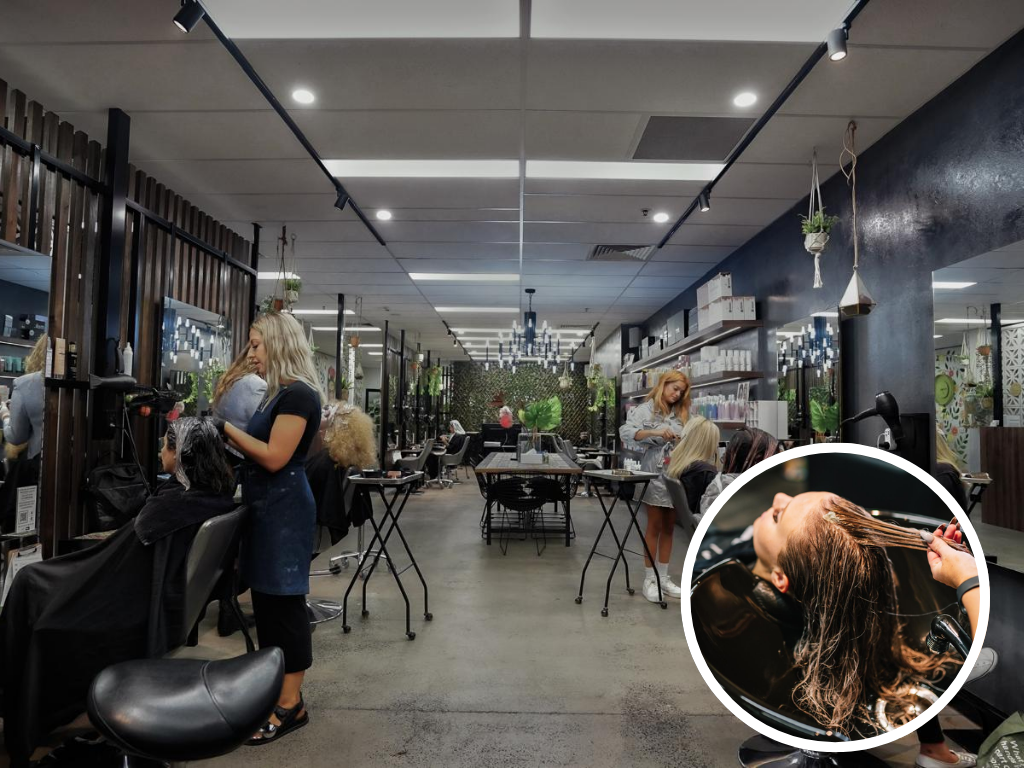
At White Ivy, we don’t view silver hair as a flaw to be hidden under a heavy blanket of tint. We see it as a sophisticated opportunity for a high-end transformation. While the debate of grey blending vs root touch up often focuses on the technical “how”, we focus on the emotional “why”. Our Mulgrave studio is a sanctuary where technical precision meets deep empathy, ensuring your transition is handled with the grace and mastery it deserves. We’ve moved beyond the concept of hair maintenance as a chore. Instead, we’ve elevated it into a curated experience that prioritises the long-term integrity of your hair and the liberation of your personal time. Our Melbourne clients choose us because they recognise that a master of craft is essential for a transition this delicate.
The exhaustion of the three-week cycle, the frustration of dull, over-processed ends, and the anxiety of that stark regrowth line all dissolve the moment you step into our space. We replace that chaos with a methodical, expert-led resolution. Our Signature Colour Packages are the cornerstone of this philosophy, providing an all-inclusive path to your best hair yet. This isn’t just about applying pigment; it’s about a holistic restoration of your hair’s natural beauty and shine.
The All-Inclusive Transformation
A White Ivy transformation is comprehensive and entirely bespoke. Every signature grey blending package is designed to address the specific needs of your hair’s unique architecture. We don’t just focus on the colour; we focus on the canvas. This includes:
- Restorative Hair & Scalp Rituals: These high-end treatments ensure your hair remains resilient, hydrated, and capable of reflecting light with a luminous glow.
- Precision Haircuts: We provide the essential architectural foundation that allows your multi-tonal dimension to move and shimmer naturally.
- Advanced Toning: We use specialised pigments to neutralise unwanted warmth and ensure your silver remains crisp and elegant.
Your Consultation: The First Step to Liberation
Every journey toward a lower-maintenance lifestyle begins with a thorough, one-on-one conversation. During your first consultation in our Melbourne salon, we map your natural grey pattern with clinical precision. We don’t believe in a one-size-fits-all solution. Instead, we assess your hair’s texture, your skin’s undertones, and your personal lifestyle to create a plan that works with your hair’s organic flow. This methodical process moves you away from the uncertainty of traditional tinting and toward the professional stability of a masterfully blended finish. It is time to reclaim your schedule and your confidence. Book your bespoke colour consultation at White Ivy Studio today.
Embrace a New Era of Luminous Freedom
The relentless cycle of the three-week root touch up is no longer a mandatory part of your beauty ritual. By understanding the technical nuance of grey blending vs root touch up, you’ve discovered that true elegance doesn’t require the harsh, high-maintenance contrast of traditional permanent dyes. Instead, it flourishes through multi-tonal artistry and the strategic use of light. You now know that 100% pigment isn’t the only answer, and that preserving the health and integrity of your hair is the foundation of any sophisticated, modern look. It’s about moving away from the “skunk line” and toward a finish that reflects your best self.
At White Ivy, our specialised grey blending experts bring Red Dot level technical mastery to every transition, ensuring your silver strands are integrated with precision and care. From our boutique Mulgrave location, we provide the expert-led resolution you’ve been seeking, moving you from the chaos of constant maintenance to the calm of a curated, bespoke ritual. Secure your Signature Colour Transformation at our Melbourne Studio and rediscover the joy of hair that looks expensive, feels healthy, and grows out with effortless grace. It’s time to step into a lighter, more liberated version of yourself.
Frequently Asked Questions
Is grey blending better than a root touch up for thinning hair?
Grey blending is often superior for thinning hair because it creates the illusion of density through multi-tonal light and shadow. A traditional root touch up uses heavy, opaque pigments that can make the hair look flat and emphasise the scalp. By using translucent tones, we add depth and movement, making your locks appear fuller and more vibrant. It is a strategic way to restore the appearance of volume while maintaining hair health.
How long does a grey blending appointment take compared to a standard tint?
A grey blending session typically requires a larger time investment, often ranging from two to four hours depending on your hair’s length and density. In contrast, a standard tint or root touch up is usually completed within 60 to 90 minutes. This extra time allows for the precise, hand-painted artistry and micro-foiling necessary to achieve a seamless, bespoke finish that lasts significantly longer between visits.
Can I do grey blending at home with a kit?
Professional grey blending cannot be replicated with a home kit. Achieving a sophisticated result requires a deep understanding of colour theory, precision sectioning, and high-end formulations that aren’t available in retail stores. Attempting this complex process at home often leads to “hot roots” or muddy patches, which eventually require expensive corrective colour services to fix. It is a specialised craft that demands the expertise of a master colourist. For those who wish to develop this level of skill professionally, exploring dedicated hair styling courses in Melbourne is the most effective path toward building genuine technical mastery.
Will grey blending make me look ‘older’?
Quite the opposite; grey blending is a remarkably youthful technique that softens the face by removing the harsh, ageing contrast of solid dyes. When comparing grey blending vs root touch up, the latter can often look like a mask that highlights shadows and fine lines. Blending introduces luminosity and movement, mimicking the sun-kissed hair of your youth. It creates a refined, intentional aesthetic that feels contemporary and fresh. Clients who love this luminous, effortless quality often find themselves equally drawn to the boho blonde lived-in colour approach, which shares the same philosophy of soft, dimensional light over flat, high-maintenance coverage.
How do I maintain my grey blending between Melbourne salon visits?
Maintenance involves using professional-grade Hair & Scalp Rituals and UV-protective products to keep your silver tones crisp and clear. Melbourne’s erratic weather can cause premature oxidation, so we recommend sulphate-free cleansers and moisture-rich conditioners. Regular glossing treatments every six to eight weeks can also refresh the shine without needing a full service. This approach ensures your colour remains vibrant and expensive-looking until your next scheduled transformation.
What happens if I want to go back to full coverage after trying blending?
Transitioning back to full coverage is a straightforward process that can be achieved in a single salon visit. Unlike the journey from permanent tint to blending, which is a gradual roadmap, returning to a global colour simply involves applying a dense, permanent pigment over your existing highlights. We always document your specific formulas; therefore, reverting to your previous look is simple if you decide the lower-maintenance lifestyle isn’t for you.
Does grey blending work on very dark or black hair?
Yes, grey blending is highly effective on dark bases and provides a much softer grow-out than a traditional grey blending vs root touch up approach. For dark hair, we focus on creating a “salt and pepper” transition using cool-toned lowlights and strategically placed highlights. This breaks up the solid silver patches and creates a sophisticated, charcoal-toned dimension that looks intentional. It avoids the stark, high-contrast line that dark-haired women often dread.
Can I use nanoplasty treatments with grey blending?
Nanoplasty is an excellent partner for grey blending, as it smooths the coarse texture often associated with silver hair while enhancing shine. Because silver strands can be more resistant and prone to frizz, this treatment provides a sleek foundation that allows your new colour to reflect light beautifully. We typically recommend scheduling your nanoplasty first to prepare the hair’s canvas, ensuring your multi-tonal blend looks polished and remains manageable for months.