Lightening Dark Mediterranean & Asian Hair Guide
Going lighter for the first time
A step-by-step guide for virgin hair moving lighter, for every hair type: what the Transformation Foil Package involves, why Olaplex matters, and how your timeline is planned around your natural hair.
A guide for clients with virgin hair (never coloured) going lighter for the first time.
Before We Begin
Going lighter for the first time is a big moment, and when your hair has never been coloured before, it deserves a considered, protective approach. This guide walks you through exactly what to expect, whatever your natural hair type.
If your hair is virgin (meaning it has never been coloured) and you’re ready to go lighter, this is a significant chemical change for your hair, and we treat it that way. This falls under our Transformation Foil Package, designed specifically for this kind of change, with protection built into every stage. Your natural hair colour and density, including naturally dark, dense Mediterranean or Asian hair, shape how we plan your sessions, so your timeline reflects what your hair actually needs.
Is This Your Journey?
- Your hair has never been coloured, permed, or chemically treated before.
- You’re ready to go noticeably lighter than your natural shade for the first time.
- You want a bright, dimensional, or fully transformed lighter look.
- Your natural hair is fine to medium and light to mid brown, or naturally dark, dense, deep brown to black, common in Mediterranean and Asian hair types.
- You’re new to lightening services and want to understand what protects your hair through the process, and how your specific hair type affects your journey.
Our approach: Every strand of virgin hair lifts differently depending on its natural depth and density. We plan your session count around your hair’s individual starting point and your target shade together, not a generic promise, and we protect your hair’s internal structure at every stage with Olaplex built into the service.
The Process: Your Step by Step Journey
Here is how we move through your Transformation Foil Package, from consultation to your finished, healthy result.
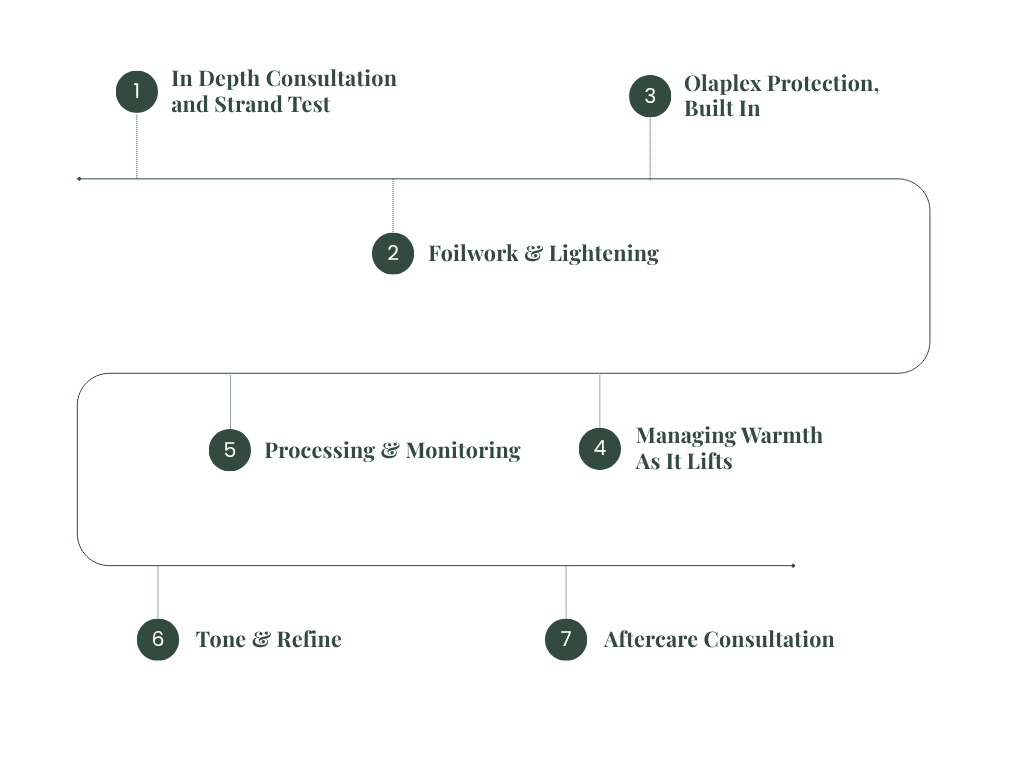
1. In Depth Consultation and Strand Test: We assess your natural hair colour, density, and condition. A strand test shows us exactly how your specific hair lifts, and what tones will emerge along the way, so we can plan a realistic session count and timeline from the start.
2. Foilwork & Lightening: Your lightener is applied in sections using the foil technique, giving your stylist precise control over placement, tone, and how much lift each section receives. On naturally dark or dense hair, this often means a controlled, moderate lift in session one rather than pushing for maximum brightness immediately.
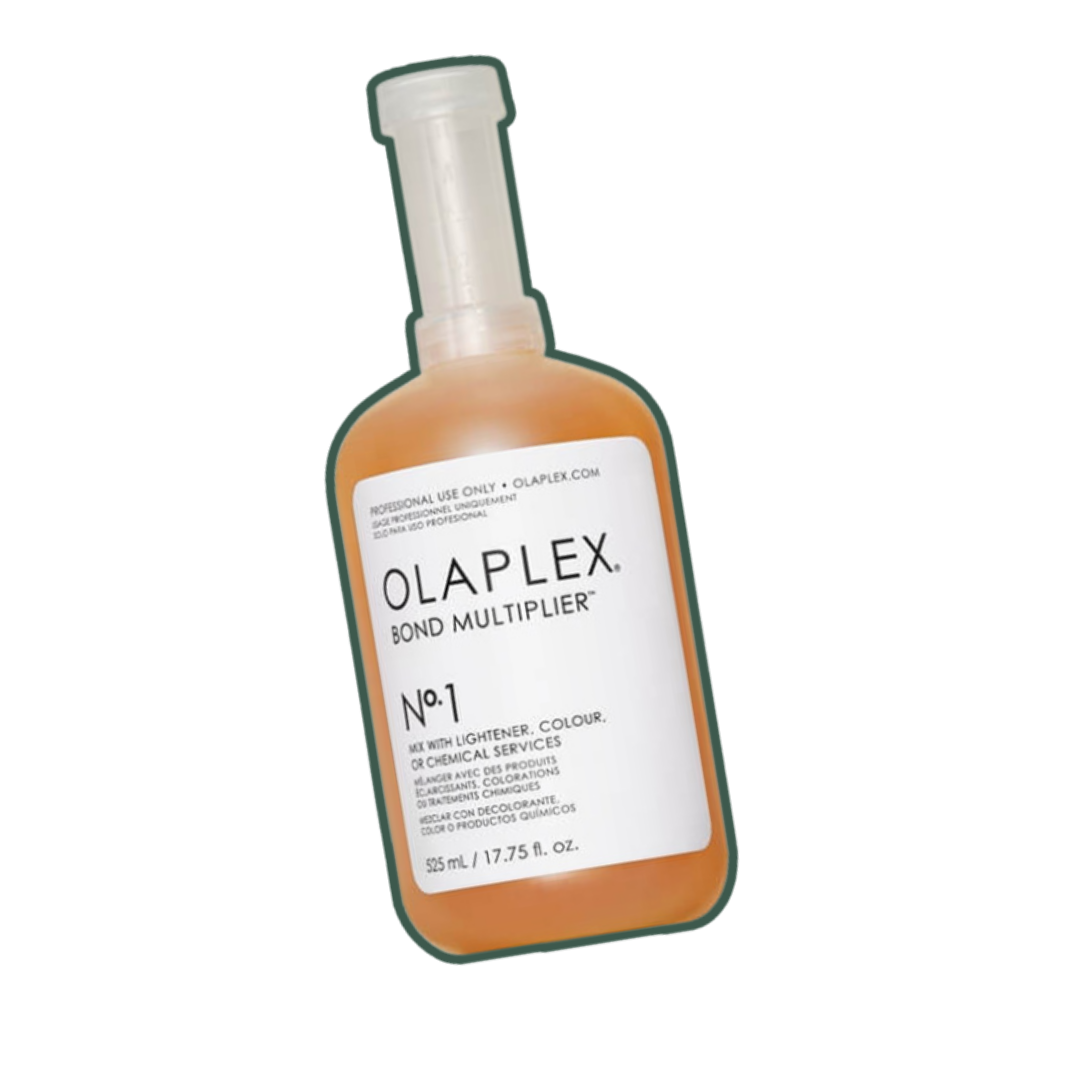
3. Olaplex Protection, Built In: Olaplex is a treatment additive mixed directly into your bleach during your service. It works by protecting the internal structure of your hair while it is being lightened, which helps prevent damage. It is not an optional extra, it is a core part of the process, especially for bigger transformations and multi-session journeys.
4. Managing Warmth As It Lifts: If your natural hair is dark, it will naturally pass through red and orange stages before reaching lighter blonde tones as it lifts. This is a normal, expected part of the process, not a mistake, and your stylist plans your toner around exactly where your hair is in that process.
5. Processing & Monitoring: Your stylist checks your hair’s progress throughout, making sure you reach your target lightness for that session without over-processing.
6. Tone & Refine: Once lifted, a toner is applied to bring your colour to its finished shade, neutralising any unwanted warmth and giving your result depth and shine.
7. Aftercare Consultation: Before you leave, we talk you through how to look after your hair at home, including your Olaplex homecare routine, so your colour and condition both stay in great shape.
How Long Will It Take?
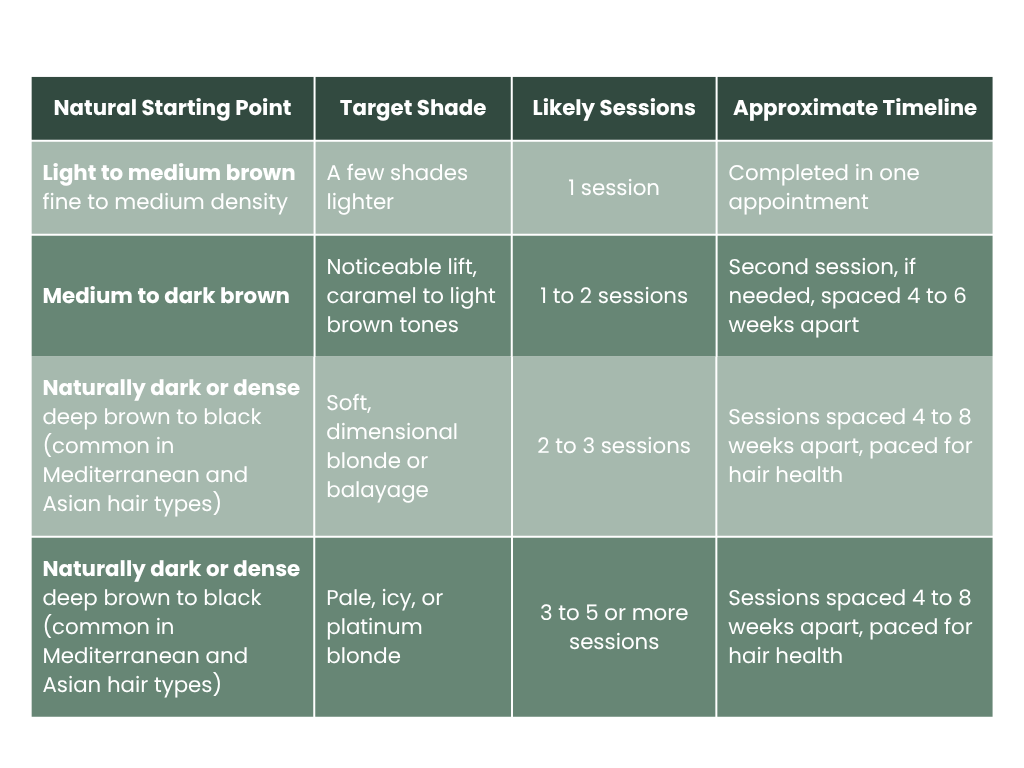
Your timeline depends on two things together: how dark your natural hair is, and how light you want to go. The bigger that gap, the more sessions your hair is likely to need, especially for naturally dark, dense hair, common in Mediterranean and Asian hair types.
What affects your session count:
- Your natural base depth (light brown through to deep black).
- The density and coarseness of your hair.
- How light your target shade is, this is often the biggest factor, not just your starting colour.
- How much dimension or precision the look requires.
How Long Will It Take?
Why the target matters as much as the starting point
Two clients with identical natural black hair can have very different journeys, depending on how light they want to go. Lifting to a soft, dimensional blonde removes less pigment than lifting to a pale platinum. We plan your session count around your actual goal, not just your starting colour, so your expectations match reality from day one.
Your stylist will confirm your personal plan and timeline at consultation, based on your hair’s individual response to the strand test and your target shade.
Protecting Your Hair Through the Process
Why We Use Olaplex
Olaplex is a treatment additive mixed into the bleach during your service. It works by protecting the internal structure of your hair while it is being lightened, which helps prevent damage. It is an important part of the process, not an optional extra, especially for bigger transformations and for hair that needs more than one session to reach its target shade.
Taking Olaplex Home
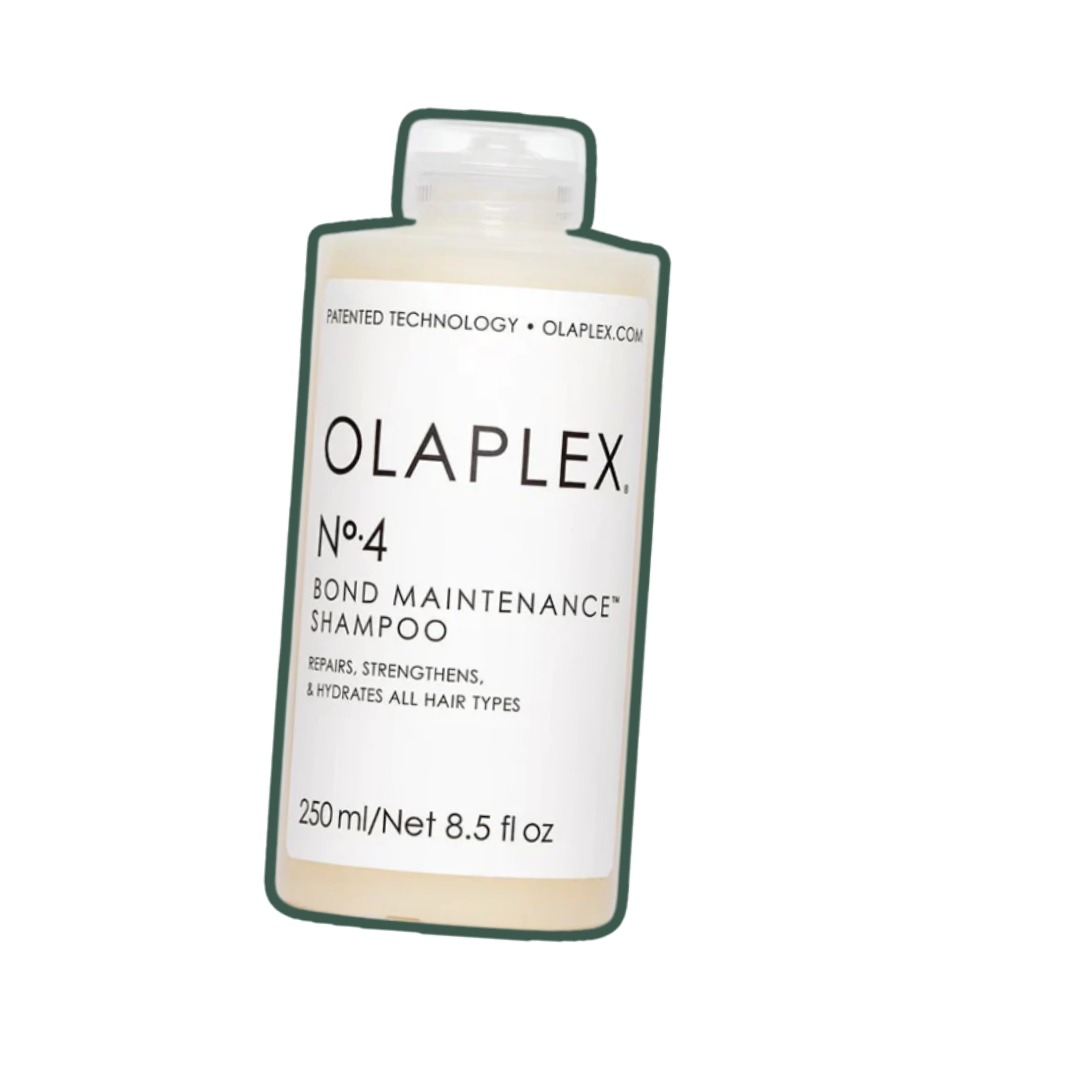
Our retail range includes Olaplex shampoo, so you can keep protecting and maintaining your hair between salon visits.
Why Orange and Red Tones Can Appear
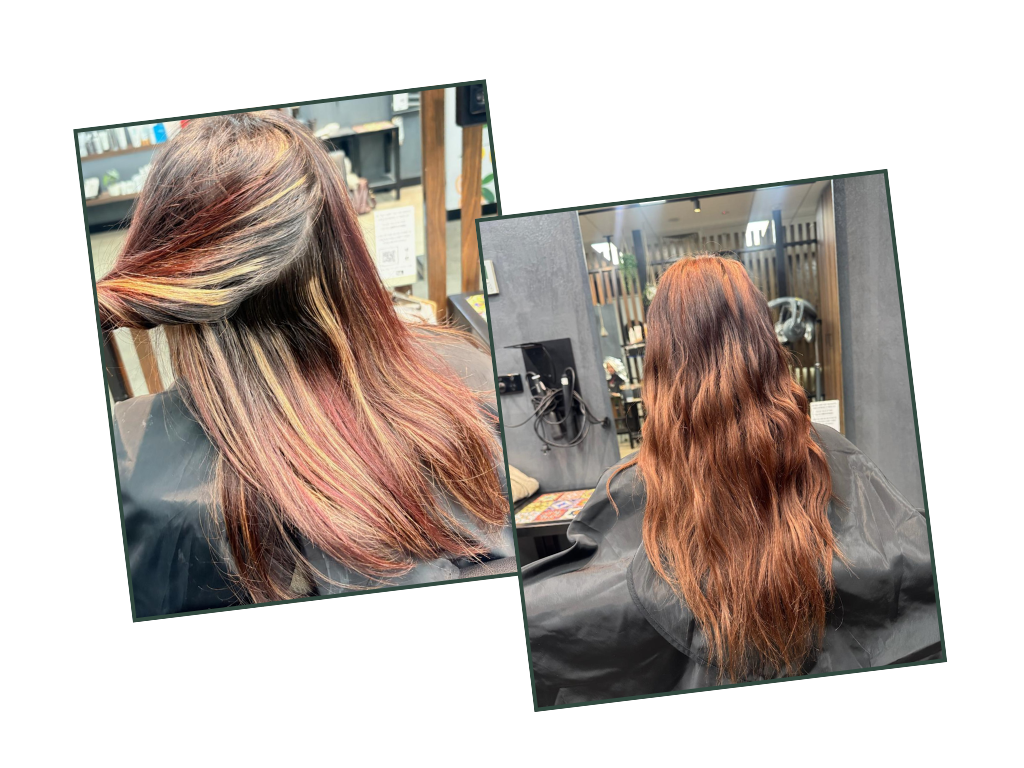
If your natural hair is dark, it holds a higher level of underlying warm pigment. As lightener lifts your natural colour, it moves through a predictable sequence, typically red, then orange, then yellow, before reaching the paler tones needed for blonde. This is simply your natural pigment structure being revealed, and it’s completely expected on darker hair types.
Your toner is chosen specifically to neutralise the warmth present at each stage, which is why toning is such an important part of this process rather than an optional finishing step. If a session ends at an orange or golden stage because that’s as far as your hair can safely lift that day, this is a planned part of your journey, not an unfinished result.
Immediately After Your Session
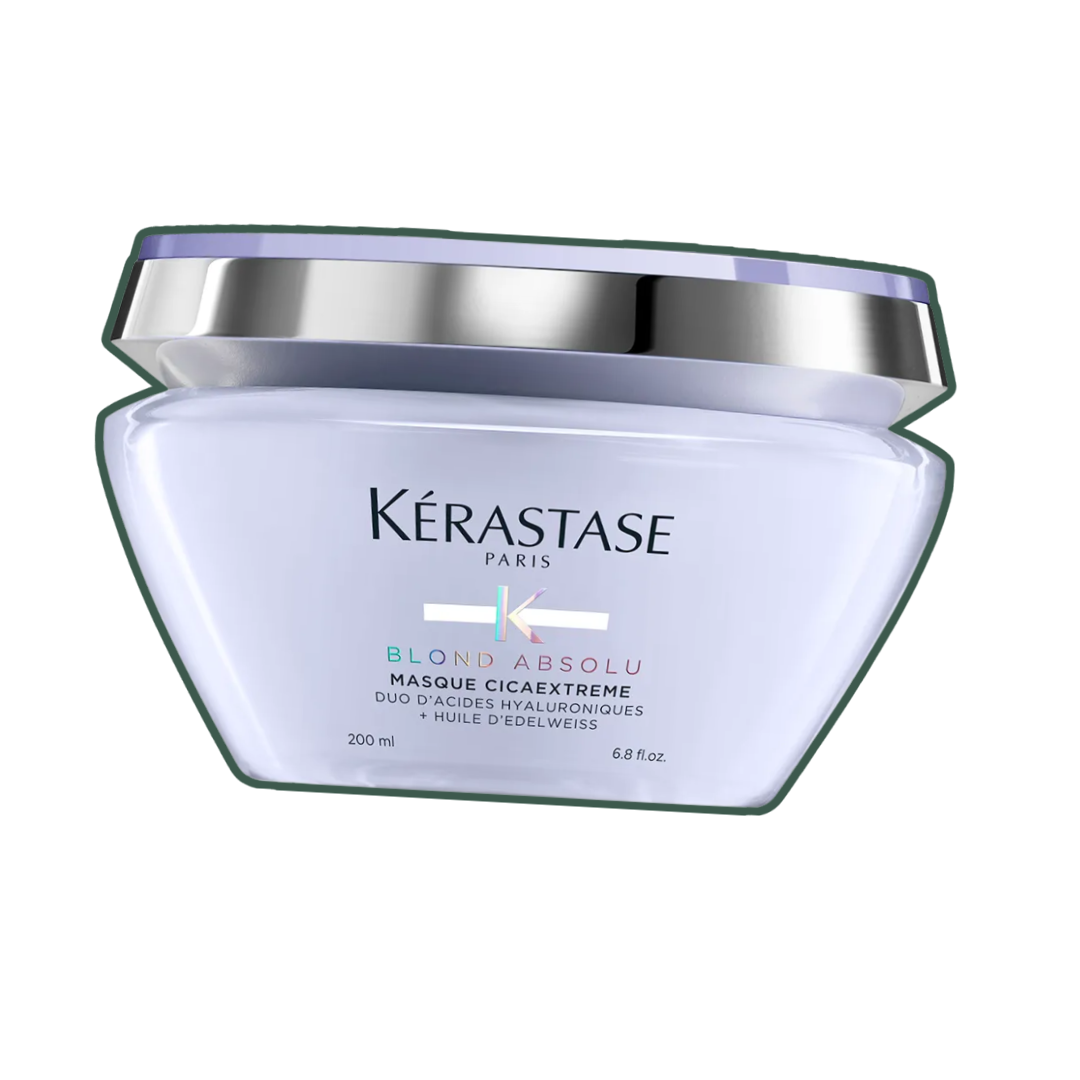
Once your bleach service is complete, your stylist will apply a Kérastase Blond Absolu Masque Cicaextreme before you leave the salon. This is recommended for every client after a bleach service.
Bleaching opens the hair cuticle and weakens its inner structure, leaving strands more porous and sensitised than untreated hair. The Cicaextreme mask is formulated specifically for over-processed, post-bleached hair: it seals the open cuticle for a smoother, more uniform finish, delivers deep hydration with hyaluronic acid that penetrates into the hair fibre, and uses edelweiss oil to protect strands and control frizz for up to 24 hours. With regular use, it also helps hair become more resilient, reducing breakage and split ends, exactly what freshly lightened hair needs most in the days after your service.
We’ll also talk you through your take-home routine before you leave, matched to your hair’s specific needs.
General Care After Any Colour Service
Whatever colour service you’ve had, a few simple habits make the biggest difference in how long your result lasts and how healthy your hair stays between visits.
- Wait before washing. Give your colour time to settle, ideally 48 to 72 hours, before your first wash, unless your stylist advises otherwise.
- Wash with cooler water. Hot water opens the hair cuticle and speeds up colour fade. Lukewarm to cool water helps your colour, and your gloss or toner, hold longer.
- Use sulphate-free, colour-safe products. Sulphates strip colour faster than almost anything else you can do to your hair. A colour-safe shampoo and conditioner protects your investment every time you wash.
- Limit heat styling, and always protect. Heat speeds up fading and adds stress to hair that’s already been chemically processed. When you do use heat tools, a heat protectant should come first, every time.
- Protect your hair from the sun and chlorine. UV exposure and chlorinated or salt water can shift your tone and dry hair out. A UV-protecting spray, and rinsing hair before and after swimming, both help.
- Keep up with your salon visits. Toners and glosses fade faster than base colour. Regular refreshes, and check-ins with your stylist, keep your colour looking intentional rather than tired.
- Brush gently, especially when wet. Hair is at its most fragile straight after washing. A wide-tooth comb and a gentle hand reduce breakage.
Extra Care for Dark-to-Light Transformations
If your hair has gone through significant lightening, especially deep black or dark brown lifted to blonde, your hair has been through more chemical processing than a single-session colour change. A few things matter more here:
Bond-repair treatments aren’t optional, they’re essential
Hair lifted this far has had more of its internal structure disrupted. Your Olaplex homecare and Cicaextreme mask routine should be followed consistently, not just used occasionally, especially in the weeks right after each session.
Expect more frequent toning, not less
Warmth returns faster on naturally dark hair once it’s been lifted, since the underlying pigment is still there under the surface. A toner refresh every 3 to 4 weeks, rather than the usual 4 to 6, is common for this hair type.
Moisture is non-negotiable
Dense, coarse hair types can look and feel fine on the surface while still being compromised underneath. Don’t wait for visible dryness, build a consistent hydration routine from session one, not after damage shows.
Be extra gentle between sessions
If you’re on a multi-session plan, your hair is doing double duty, recovering from the last session while preparing for the next. Minimise heat styling, chemical services (like perms or relaxers), and harsh brushing more strictly than you would after a single colour service.
Trims matter more here
Because this hair type is often lifted over multiple sessions, ends can accumulate more processing over time than in a single-session transformation. Regular trims prevent split ends from travelling further up the hair shaft.
Talk to your stylist before trying anything new
Box dye, at-home toning kits, or other salons’ services in between your sessions can interfere with your planned lift and put your hair at real risk. Stick to your White Ivy plan until your journey is complete.
Bond Repair (top priority after correction)
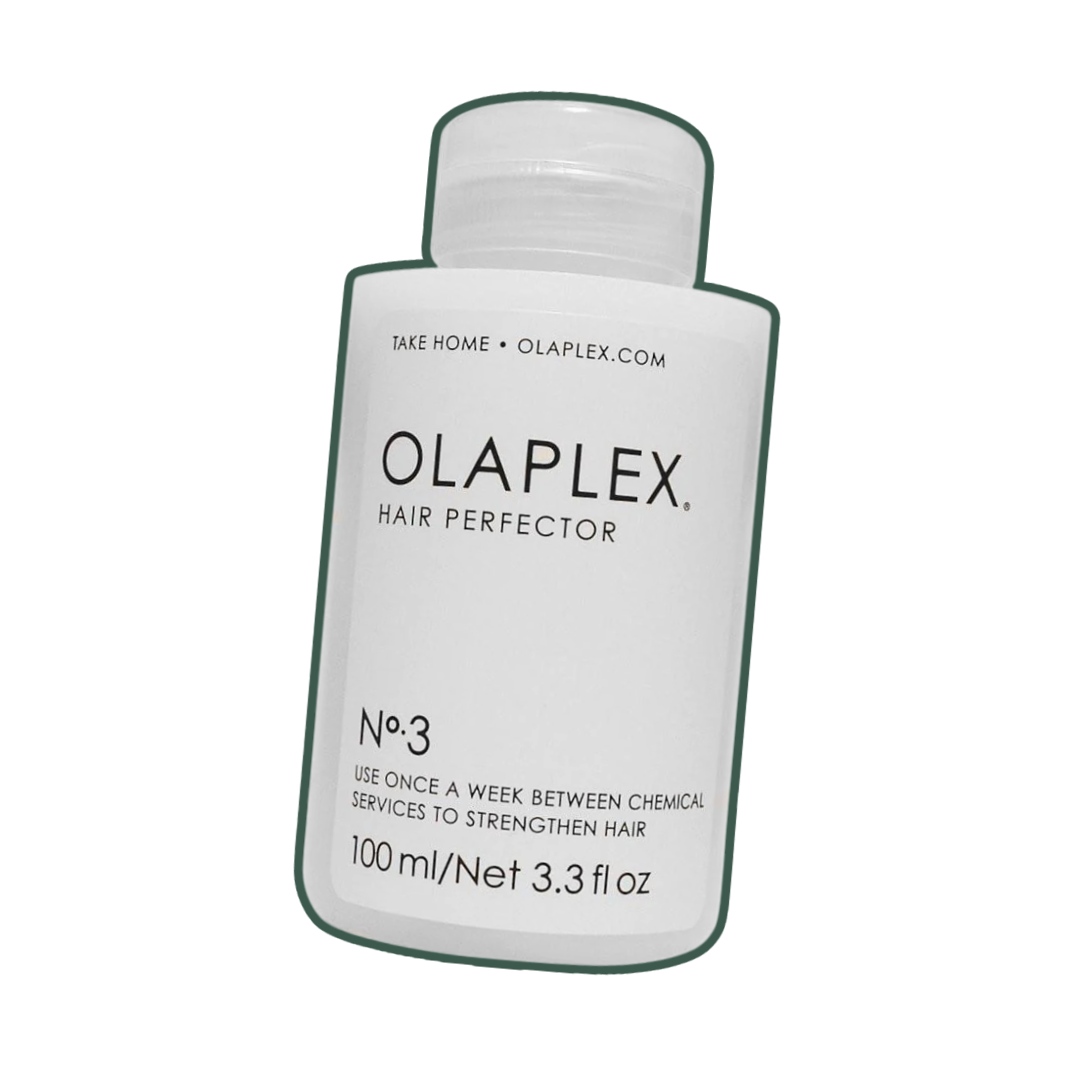
A concentrated at home treatment that strengthens hair from within and reduces breakage.
Sulphate-free and colour-safe, re-links broken bonds.
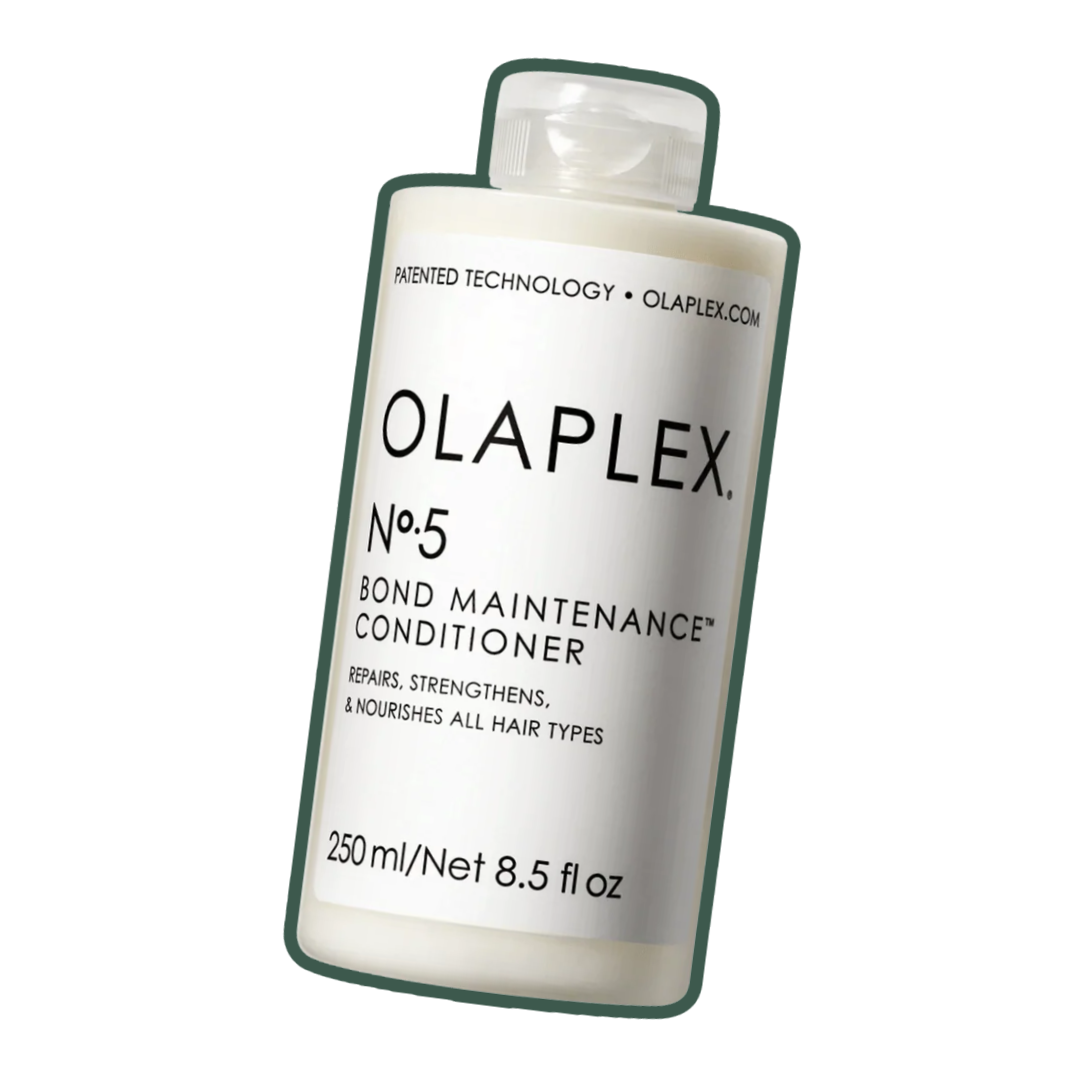
Restores strength and moisture, adds shine.
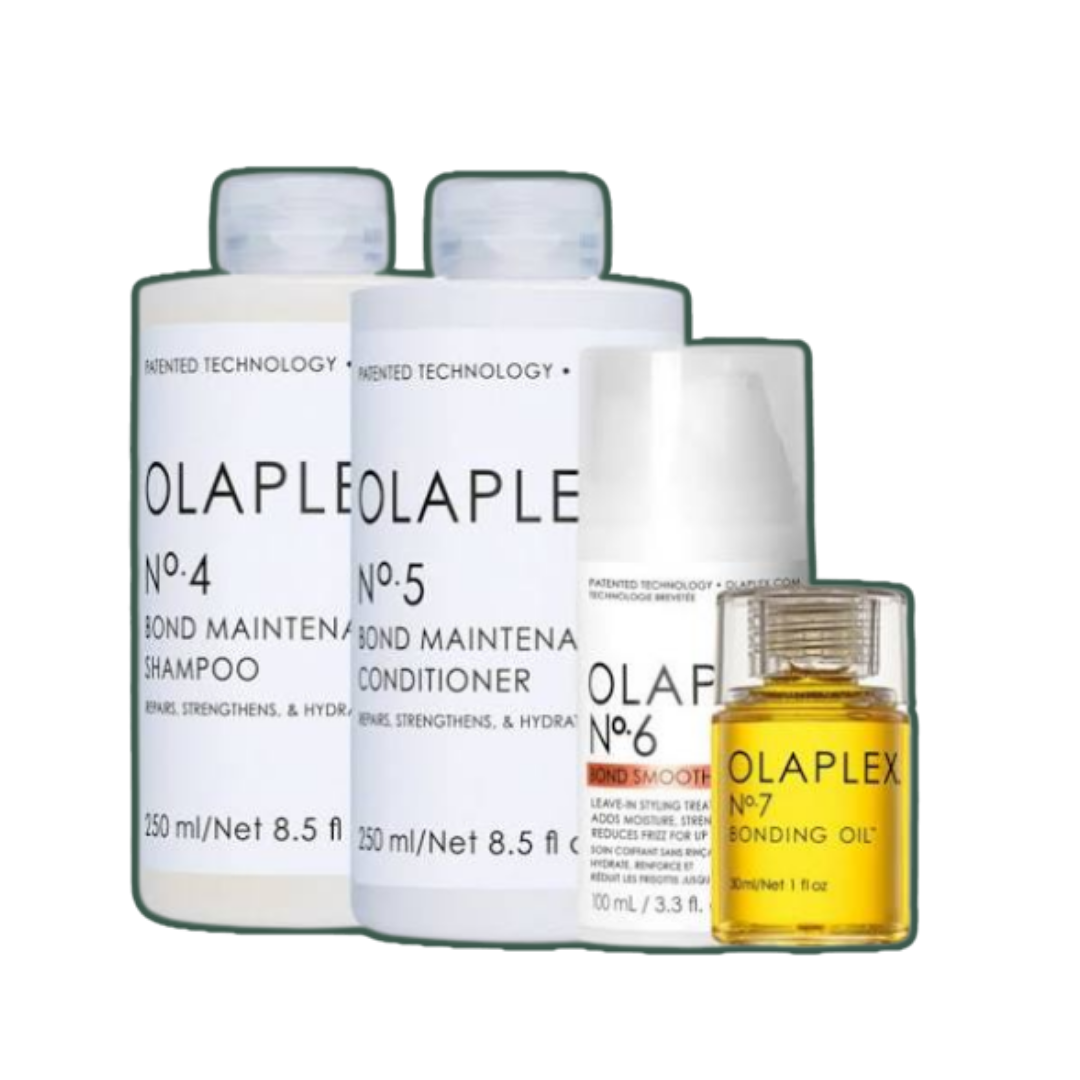
Sulphate-free and colour-safe, re-links broken bonds.
Colour Care & Hydration
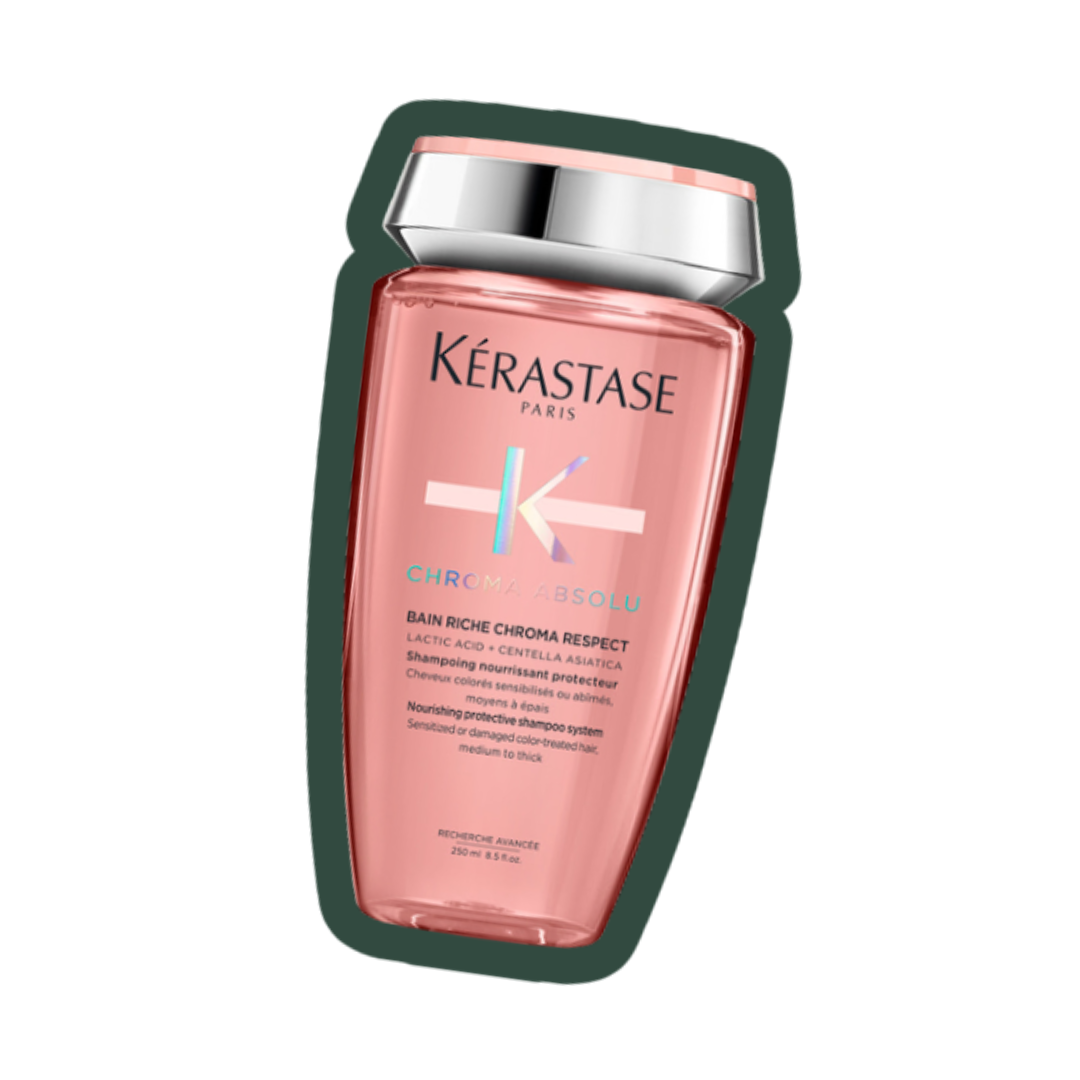
For thick, coloured hair.
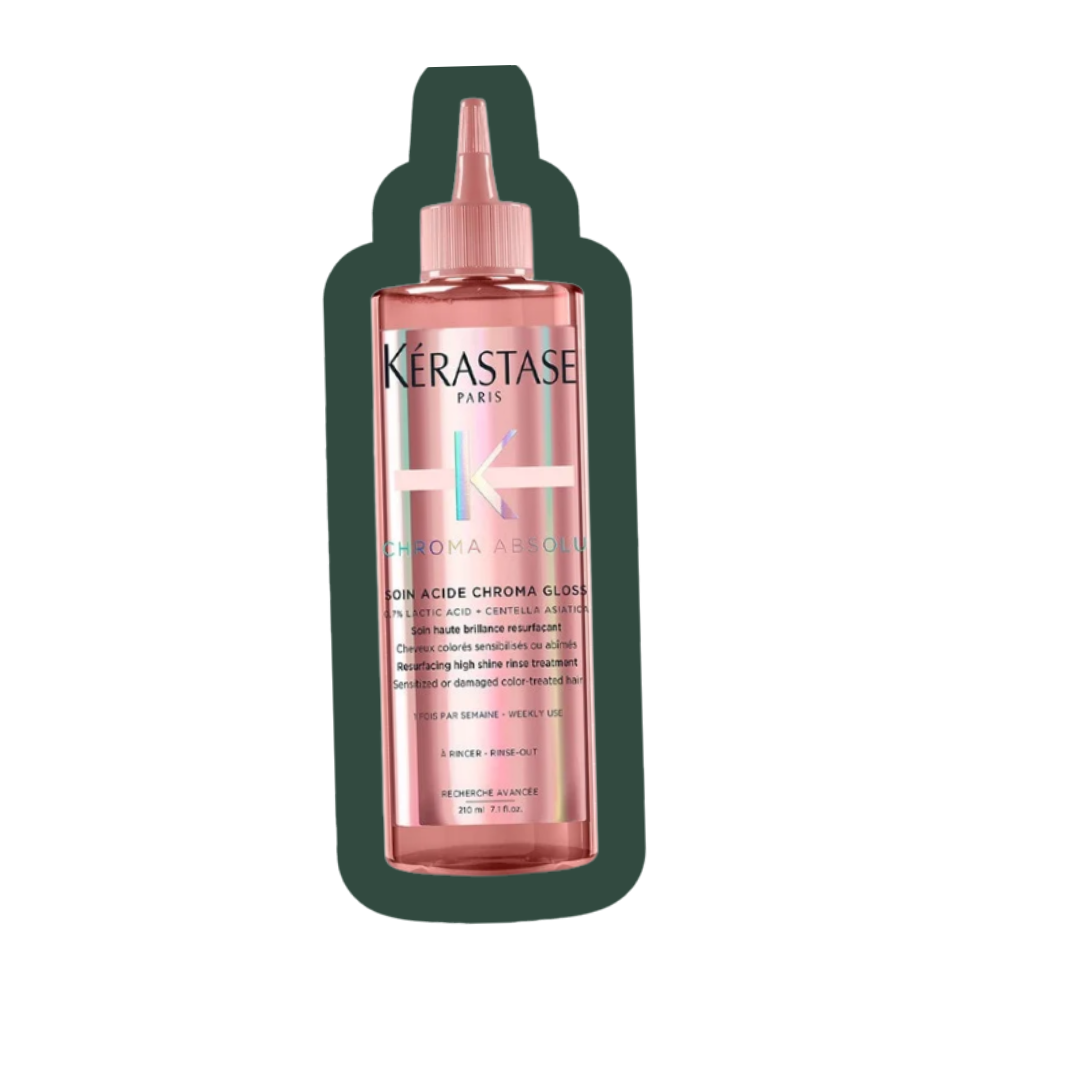
Seals the cuticle and boosts shine after correction.
Suited if your correction lightened toward blonde.
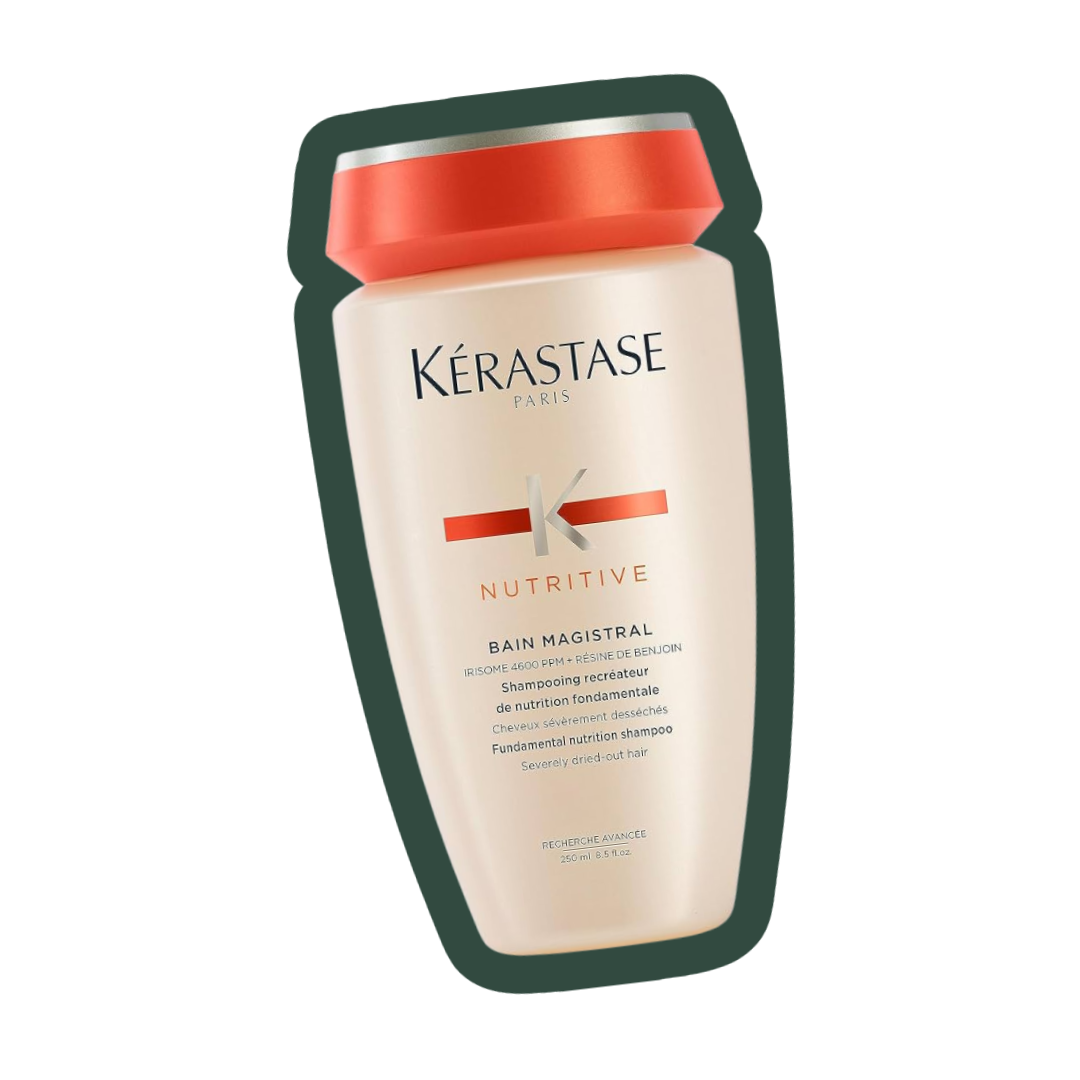
For dryness caused by the correction process.
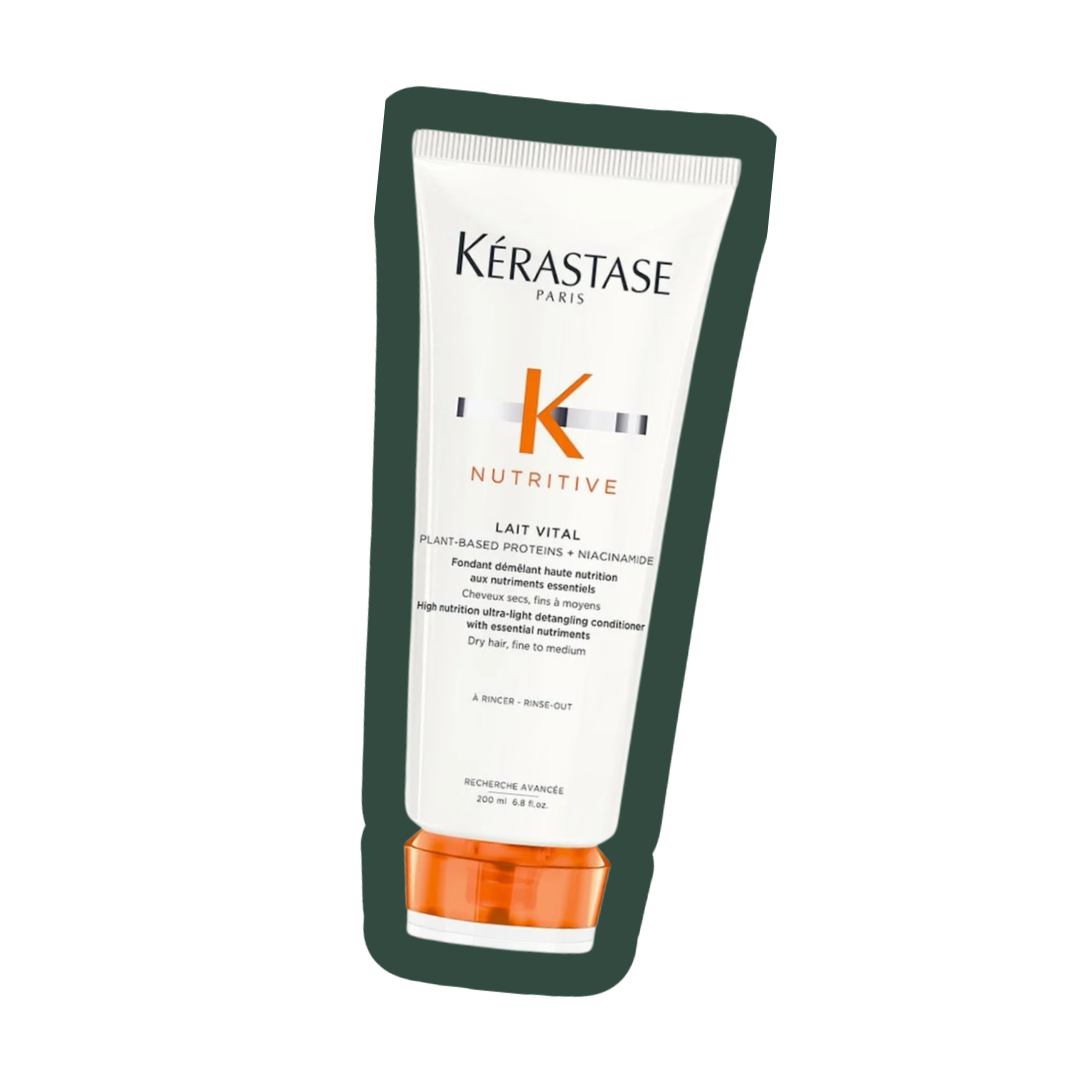
For ongoing moisture.
Your stylist will recommend the right combination for your hair at your aftercare consultation, you won’t be sent home with everything, just what your hair actually needs.
FAQs
Will my hair be damaged by going lighter?
Olaplex is built into your bleach service specifically to protect your hair’s internal structure while it lightens. Combined with careful monitoring during processing, this significantly reduces the risk of damage, whatever your hair type.
Can I go as light as I want in one session?
Not always, and that depends a lot on your natural starting point and your target shade. Your stylist will tell you honestly what’s achievable in one sitting based on your hair’s depth, density, and condition, and will plan further sessions if your goal needs more lift than is safe to do at once.
Why does dark or dense hair need more sessions?
Naturally dark, dense hair, common in Mediterranean and Asian hair types, holds more underlying pigment, which needs to be lifted gradually. Pushing it too far too fast is one of the most common causes of damage, so we pace the journey to protect your hair’s strength. The lighter your target shade, the more of that pigment needs to be safely removed, which is why the same dark hair can mean very different session counts depending on the goal.
Is it normal for my hair to look orange or red partway through?
Yes, completely normal on darker natural hair. It lifts through red and orange stages before reaching blonde, and your stylist plans your toner around exactly where your hair is in that process.
Do I need to buy the Olaplex range?
It’s not compulsory, but it’s genuinely one of the best ways to keep protecting your hair’s condition between visits, and we’d recommend it, especially after a first lightening service or a multi-session journey.
How much will this cost?
Pricing for the Transformation Foil Package is confirmed at your consultation, based on your natural hair, session count, and the result you’re after.