Correcting Your Base Guide
Creating the right foundation for what comes next.
Who Is This For?
- You have a heavy build up of previous box dye or salon colour on your hair
- Your colour has gone patchy, muddy, brassy, or an unexpected tone
- Multiple layers of pigment are sitting on the hair shaft from repeated colouring
- You want to move to a lighter, brighter, or more natural shade after years of colour build up
- A previous colour service, in another salon or at home, hasn’t turned out the way you expected
- You currently cover your grey with a box dye or all over colour and want it corrected before we blend your grey
- You have naturally medium to dark hair and you want a vibrant colour that cannot be achieved by a single process and requires gentle pre lightening
Before We Begin
Most importantly- what does it even mean to correct your base?
Correcting your base means creating the right foundation for your next colour. We carefully remove or adjust unwanted artificial pigment, uneven colour and excess depth to create a cleaner, more even starting point. It isn’t necessarily your final colour — it’s the work that allows us to safely and predictably move towards your hair goal.
Correcting your base is where every colour journey that involves existing colour build up begins, whether you’re aiming for a full colour correction, a fresh transformation, or blending your grey over previously dyed hair. This guide walks you through exactly what to expect.
Before you get started, please read the Preparation Guide first. It covers everything you need to do ahead of your appointment, so your hair is ready and your consultation runs smoothly.
If your hair carries build up from previous box dye, salon colour, or several years of layered pigment, correcting it properly takes time, technical judgement, and, most importantly, a plan that protects the health of your hair. This guide has been put together so you walk into your first appointment feeling informed, confident, and clear on what the process involves.
Real Client Journeys
Case Study 1
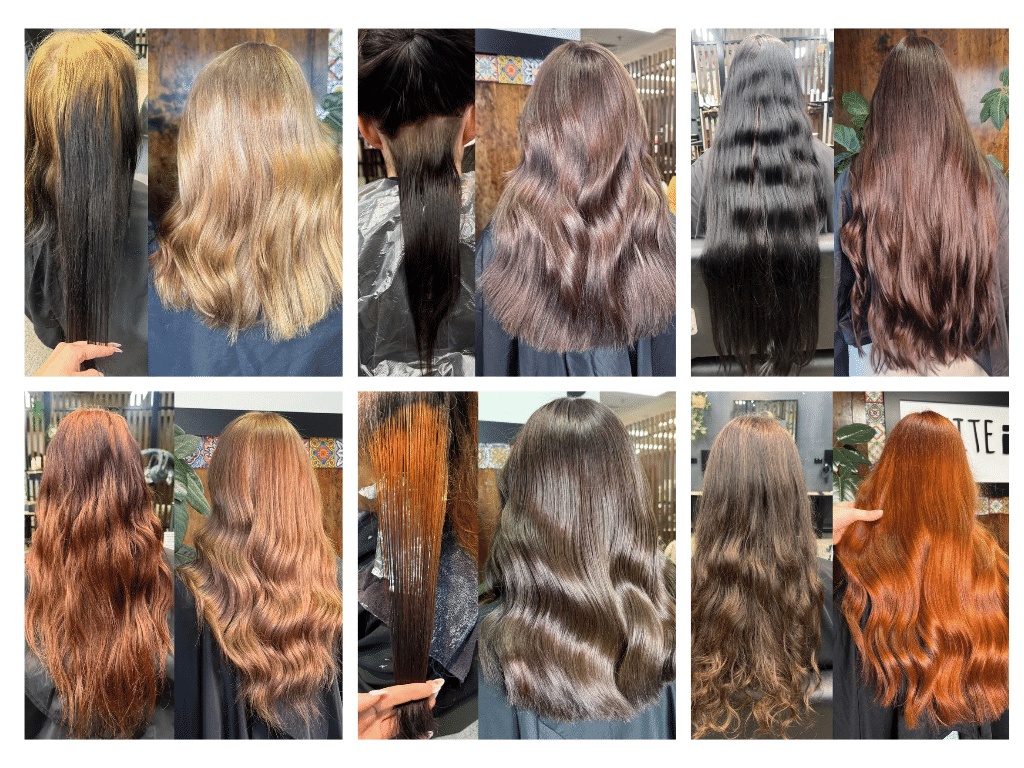
This guest coloured her natural red hair to nearly black. Although dark pigment remained strong, it was not too heavily built up and was able to be removed in the one sitting.
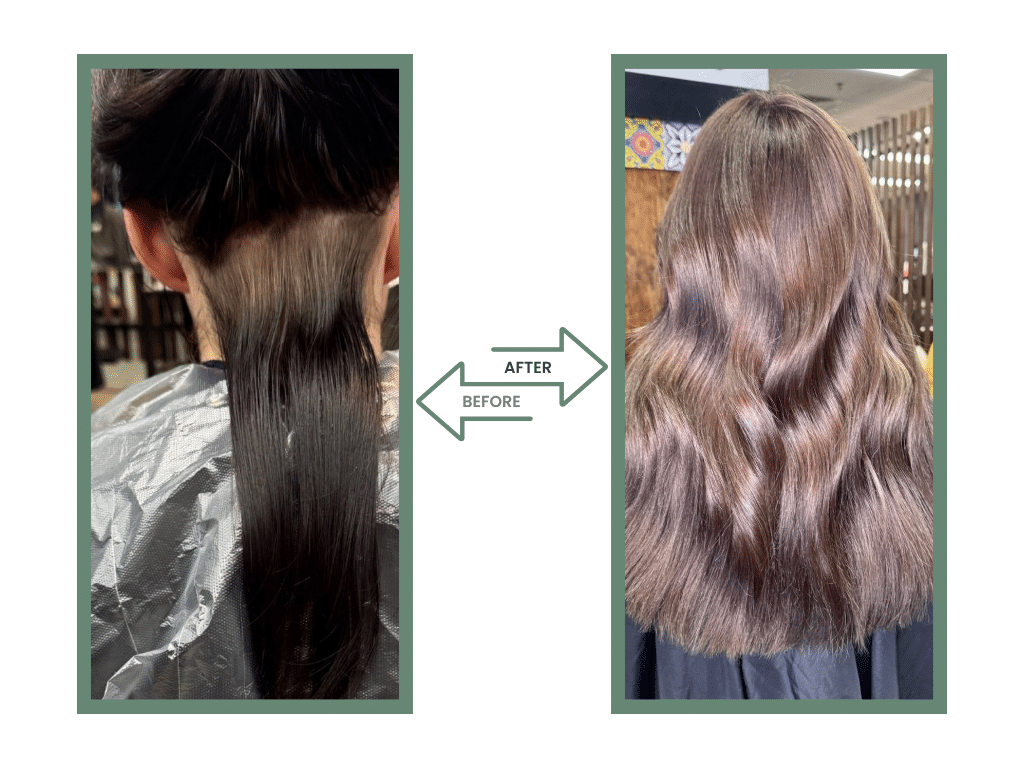
This guest, same as the first, coloured her natural light hair to nearly black. Although dark pigment remained strong, it was not too heavily built up and was able to be removed in the one sitting.
Now that these guests’ base have been corrected, they have an even and solid colour to work from. Now they have the option to either leave their hair to grow out naturally and seamlessly or at a future appointment, they’ll be able to have highlights or balayage done without complications.
Case Study 2
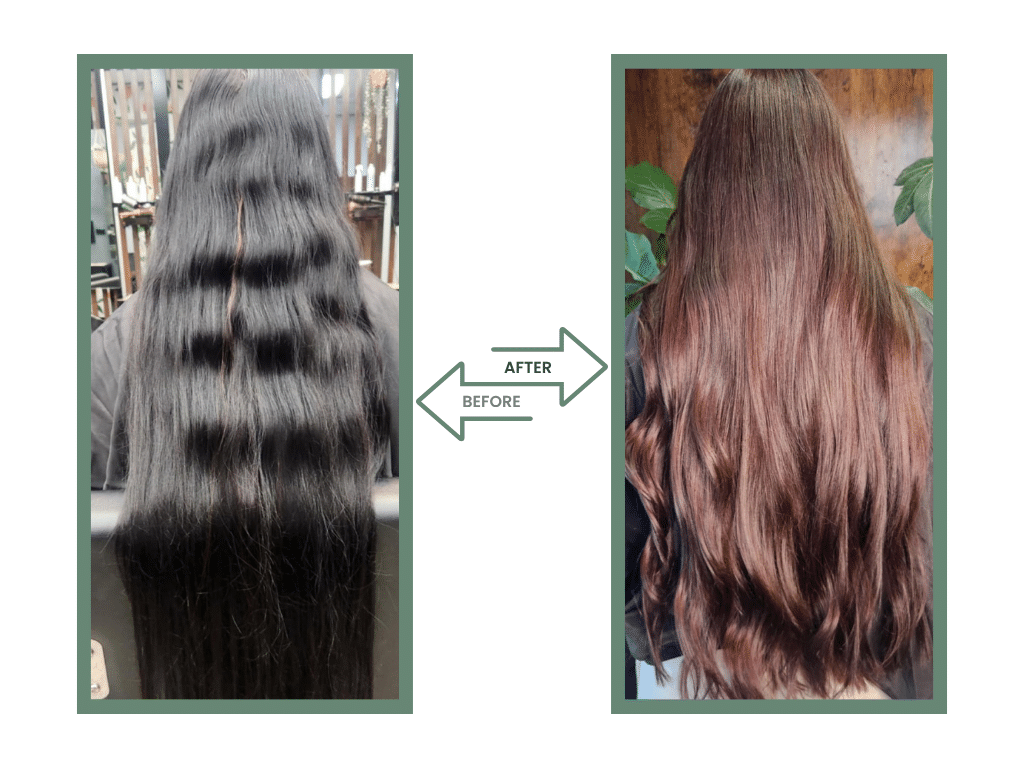
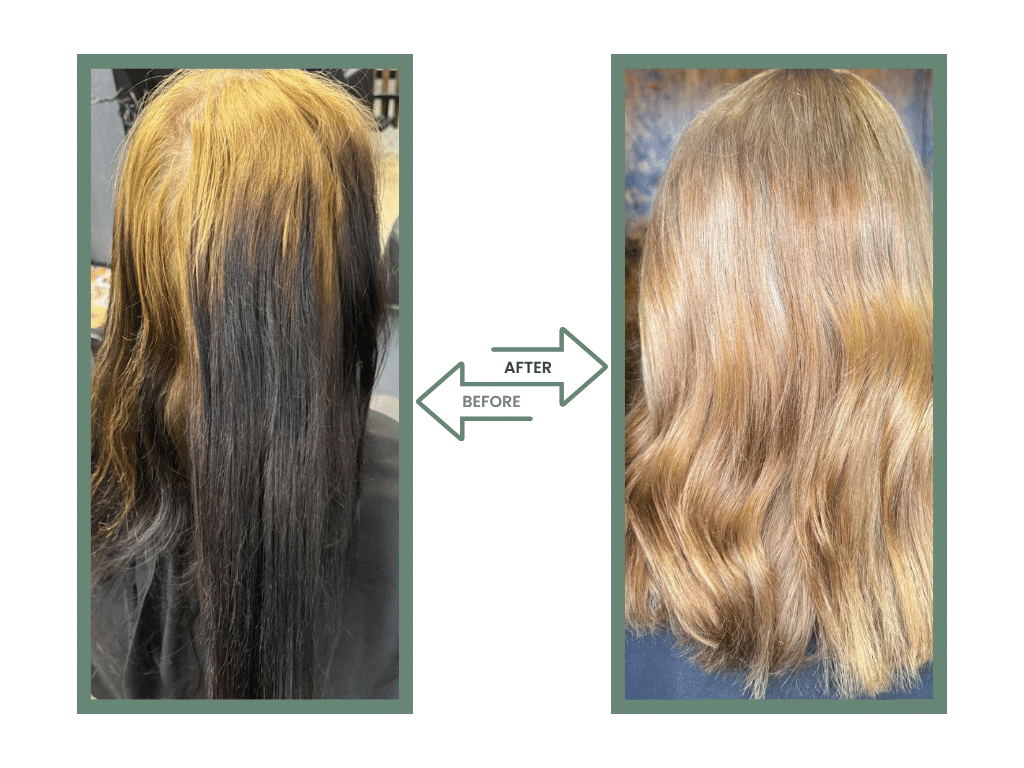
This guest had a heavy build up of black box dye, and being so long meant the build up through her mids and ends was even more intense, with the hair also more fragile. We were able to correct her base and lift around 5 levels in her first session. Depending on how light she wants to eventually be, we may repeat this same process in 4-8 weeks time.
Case Study 3
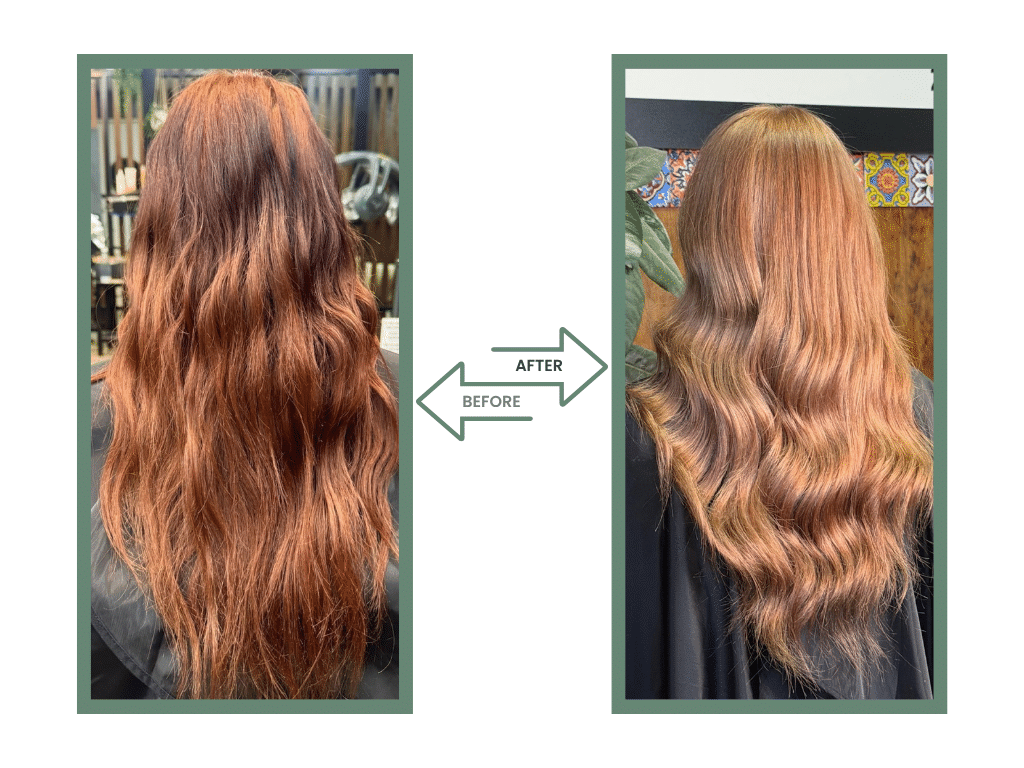
This guest had patches of dark pigment throughout her hair, which we were able to safely remove and take her back to her natural colour.
After 3-6 weeks of nurturing her hair at home, we will be able to add some contouring around the face and some dimensional foils throughout.
Case Study 4
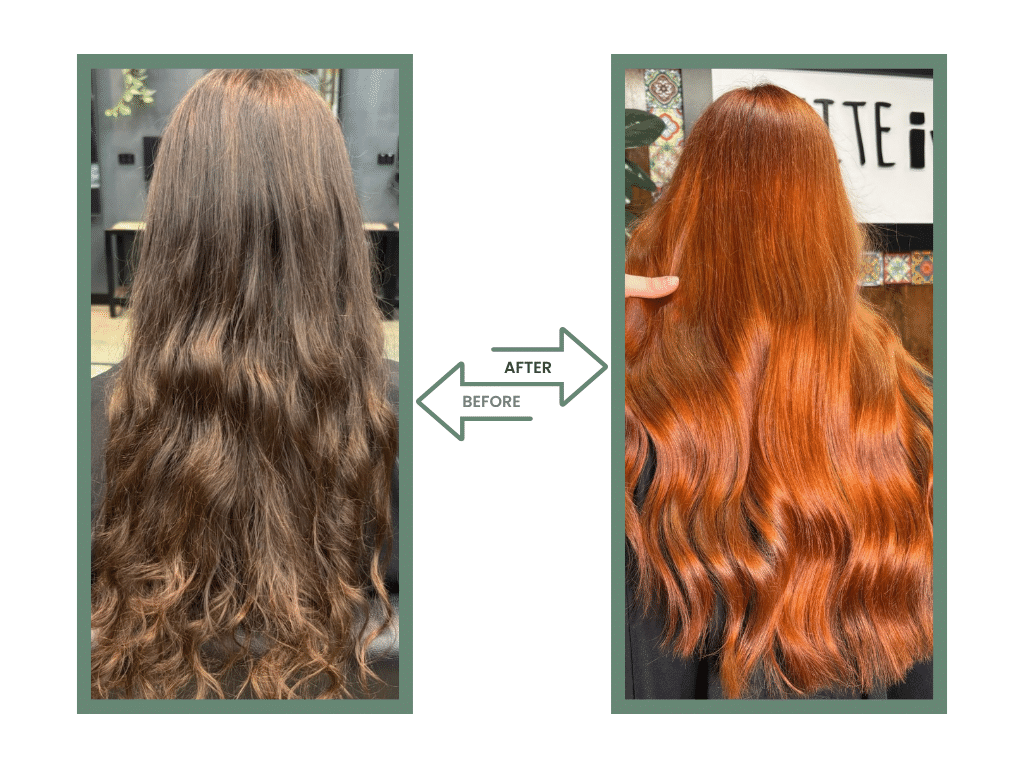
This guest came in with completely virgin hair, wanting a super vibrant copper. We pre lightened her entire base and finished with a semi permanent vivid.
Case Study 5
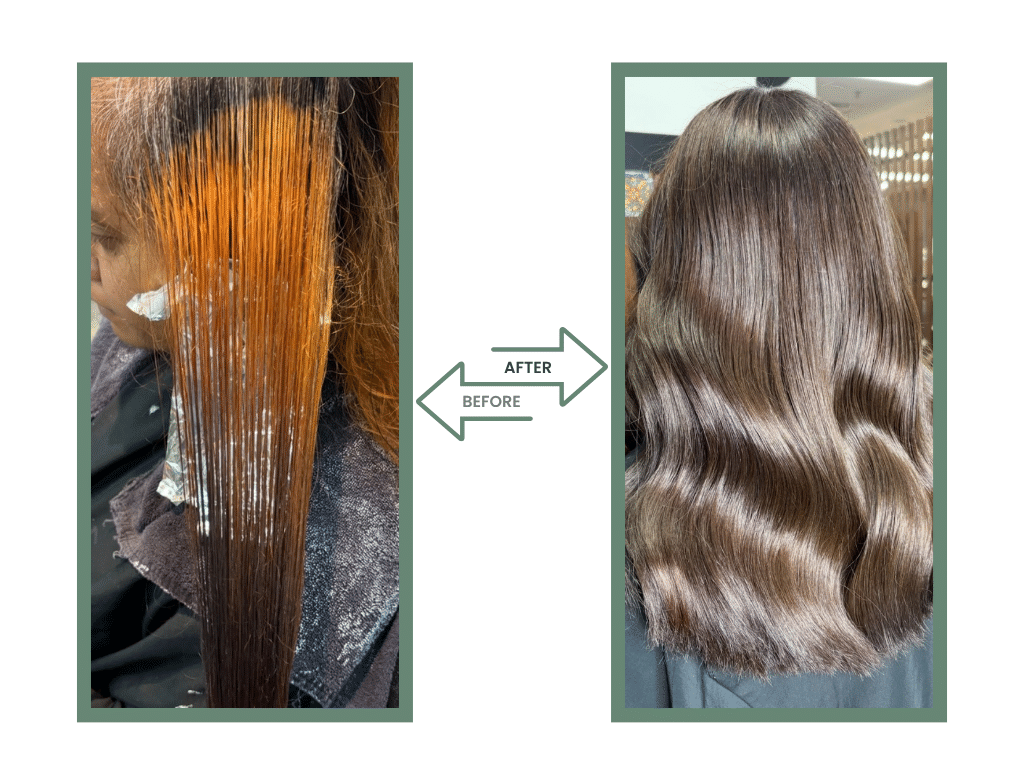
This guest came in with a very heavy build up of dark colour. We corrected her base as light as safely possible, as she is on her way to grey blending.
For her second session we will do transformation foils on her to create a multi tone effect that mimics her natural grey pattern.
Now that these guests’ base has been corrected, they have an even base to work from. From here, they can either let their hair grow out naturally and seamlessly, move on to highlights or balayage without complications, or continue their journey into grey blending.
Our Approach: Your Step by Step Journey
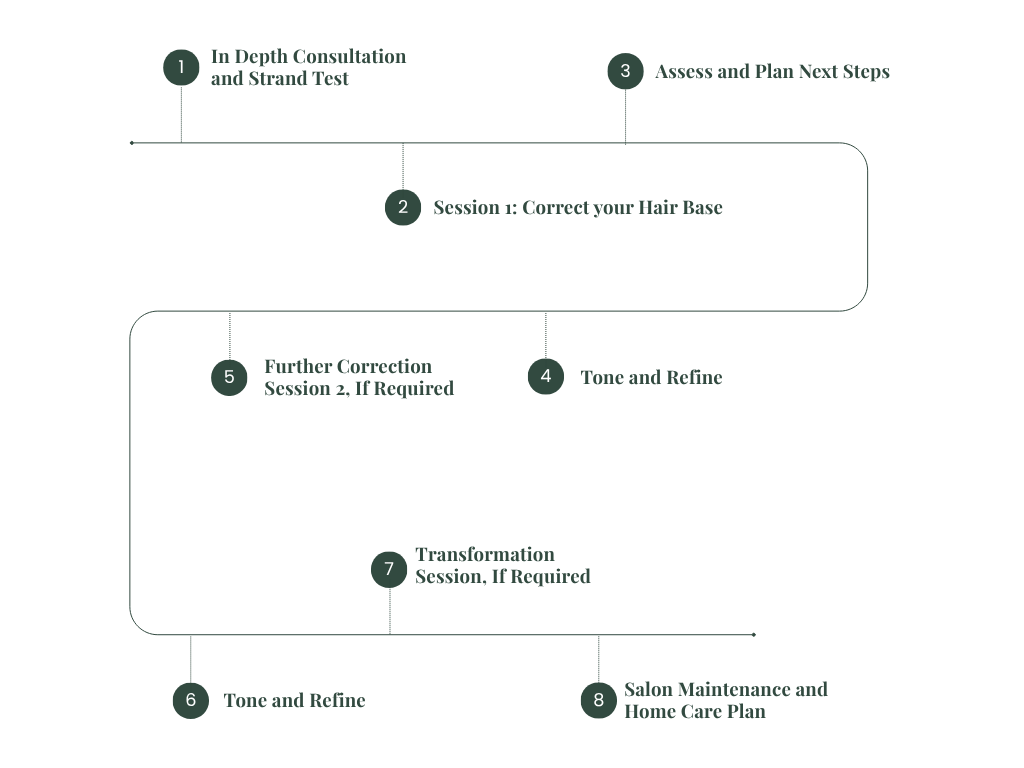
- In Depth Consultation and Strand Test
Before anything is booked in, we examine your hair’s colour history, condition and
elasticity. A strand test shows us exactly how your hair will respond to the correction
process, so your first ression can be planned with confidence. - Session 1: Correct your Hair Base
This is where the real work begins. We remove unwanted tones such as orange, yellow or
red and rebuild an even base to work from. Depending on your starting point, this
session can run several hours, as we work carefully to protect the health of your hair
while making real progress. - Assess and Plan Next Step
Once the base is corrected, we assess the result together. Some hair needs just one
more visit, other hair needs a longer plan. We will be upfront about what your hair can
safely handle next and map out a clear timeline so you know what to expect. - Tone and Refine
With the base sorted, we tone to remove any leftover warmth and refine the overall
finish. This step brings your colour closer to the natural, even result you are after, and
sets the stage for any further correction if needed. - Further Correction Session 2, If Required
For hair with heavier pigment build up or a bigger colour change, a second
correction session may be needed. We space this out to protect your hair’s
integrity, giving it time to recover between sittings while still moving you toward
your goal. - Tone and Refine
As with Step 4, we tone and refine again after any further correction work. This
keeps your colour consistent and prevents unwanted tones from creeping back
in as we get closer to your final result. - Transformation Session, If Required
If your goal includes a bigger style change once your base colour is corrected,
such as a full transformation to a lighter or more dimensional look, this is where
we bring it to life. Not every client needs this step, it depends on your starting
hair and your end goal. - Salon Maintenance and Home Care Plan
Colour correction does not stop when you leave the chair. We will set you up
with a home care plan, including the right products to protect your new colour
and your hair’s health, plus a schedule for follow up toning and maintenance
appointments. Sticking to this plan is the key to keeping your results looking
their best.
Why is toning so important?
As we gradually remove darker artificial pigment from your hair, warm
underlying tones can become exposed. This is a completely normal part of the
correction process and may appear as red, copper, orange or gold depending
on your starting point.
A toner is a translucent colour that we use to soften, balance and refine these
unwanted tones while your hair is progressing through its correction journey.
Toner is intentionally translucent rather than an opaque permanent colour-it is
also designed to fade so that we can get back in and make adjustments as we
need to!
Why does my warmth come back?
Our founder, Carla, describes toner as a “Band-Aid between visits.” Because toners
are translucent, they help soften and disguise the warmth underneath, keeping
your colour polished and wearable while we continue correcting your base.
As your toner gradually fades, you may begin to see some of that underlying
warmth again. This doesn’t mean your correction has failed or your hair has gone
backwards. You’re simply seeing the pigment underneath that we’re still in the
process of correcting
Will my toner eventually last longer?
Yes. As we progress through your correction and create a cleaner, more even
base, there is less underlying pigment and inconsistency for your toner to refine.
At this stage, your colour generally becomes easier to maintain and your toner
can appear more consistent for longer.
Maintaining your colour between sessions
Depending on your individual journey, we may recommend a Tone & Refine
appointment between correction sessions. Your stylist will guide you on the
right timing for your hair and make sure your colour continues to look beautiful
while we safely work towards your final goal.
Think of your toner as the finishing veil over your correction — not the correction
itself.
How Many Sessions Will You Need?
No two heads of hair are the same, so no two base corrections are either. Your
exact number of sessions and timeline depends on how much build up is
present and how your hair responds.
The number of sessions you need depends on:
- How many layers of pigment are currently present in your hair
- Whether your hair has been coloured at home, in multiple salons, or both
- The current condition and elasticity of your hair
- How far your desired end result is from your current colour
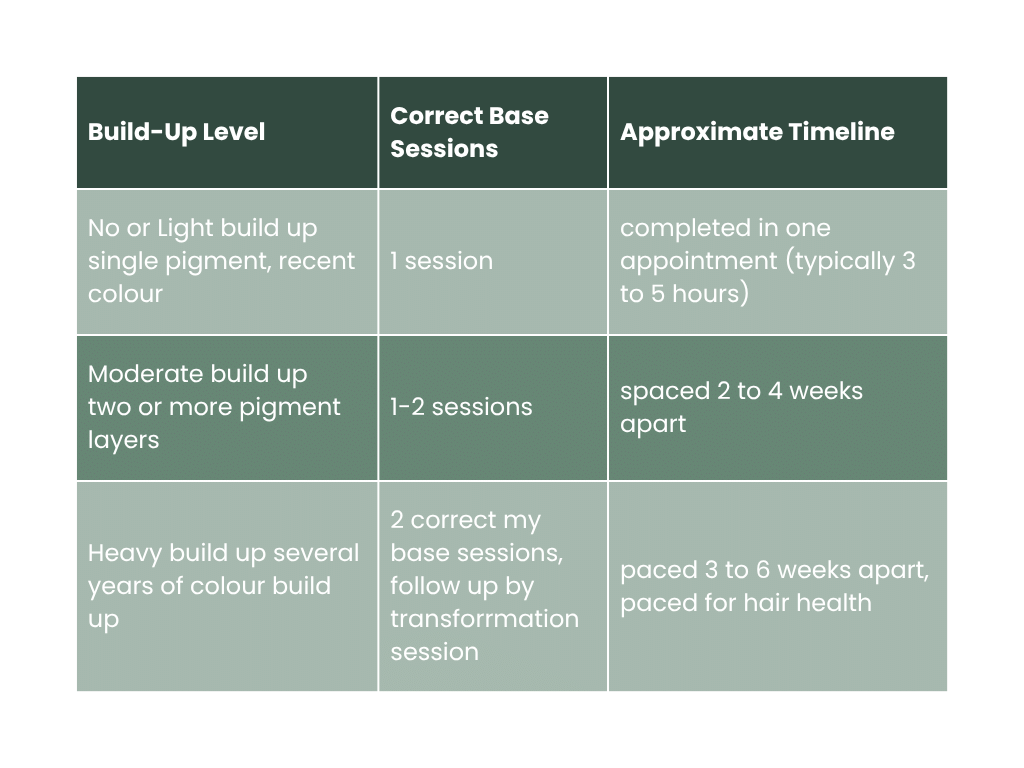 Why the gaps between sessions?
Correction work is intentionally spaced out, never rushed back to back.
This gives your hair time to recover its strength and moisture between
sessions, which is essential for a healthy, lasting result.
Between and after your correction sessions, your stylist will tone your hair
to remove any leftover warmth, covered in the separate Tone and Refine
guide.
Your stylist will confirm your personal estimate at consultation and
update it as your journey progresses. This is a guide, not a guarantee.
While our experience and strand testing allow us to predict how your hair
is likely to respond, every head of hair is different. For this reason, we
cannot guarantee an exact result, level of lift or number of sessions. Your
journey will be continually assessed and adjusted while protecting the
health of your hair.
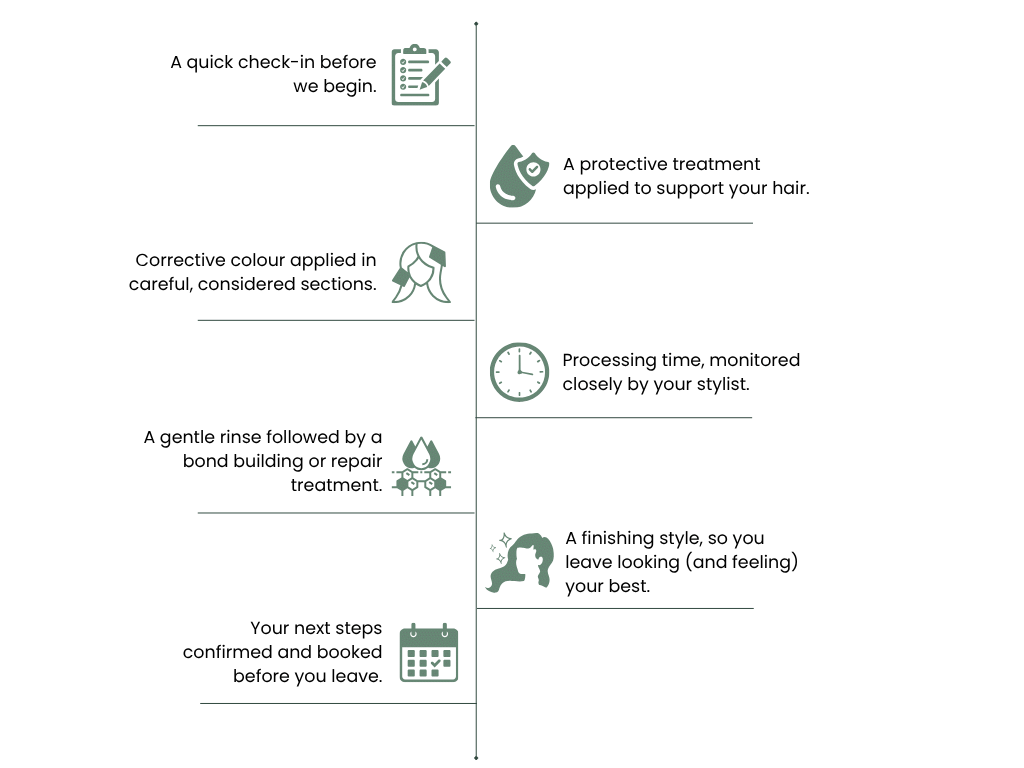
What Happens Each Session